Ownership Agreement for the Living Nation
Avtalet i sin helhet, paragraf för paragraf. Varje § visas med tre lager: originaltexten ordagrant ur avtalet, en förklarande engelsk text som säger vad paragrafen faktiskt betyder och får för följder, och en illustrerande bild. Undertecknande part: Rune Rullgrus. Godkännande parter: Sune, Berit och Lindor, i egenskap av medägare av Living Nation.
 Intentionen görs offentlig — en frivillig försäkran, inte en påtryckning.
The signing party hereby declares its actual desire to become a co-owner of the Living Nation.
Before anything is transferred or registered, the signatory states — in their own voice — a genuine wish to join. The word is declares, and the object is its actual desire: the agreement opens not with an obligation but with an intention.
This matters because everything that follows rests on consent. A co-ownership that begins with a free declaration can later be upheld, defended and renewed on the same basis; one that begins with pressure cannot. §1 is therefore the foundation stone — it fixes the reason for the whole contract before the first duty appears.
 Det som läggs in i avtalet är personen själv — kropp och medvetande.
The signing party enters into this agreement with their living body and conscious mind as the substance in the Living Nation.
The parties do not exchange money or shares as the primary substance; the signatory contributes their living body and conscious mind. That is what makes the Living Nation a physical body of people rather than a paper construct — the same idea the Constitution's §5 states when it says stakeholders contribute body and mind and that the Nation does not own its shareholders.
Two practical consequences follow. The commitment is personal and cannot be delegated to a proxy or an entity, and it requires presence: a body that shows up and a mind that is awake and willing. Co-ownership here is something you are, not something you merely hold.
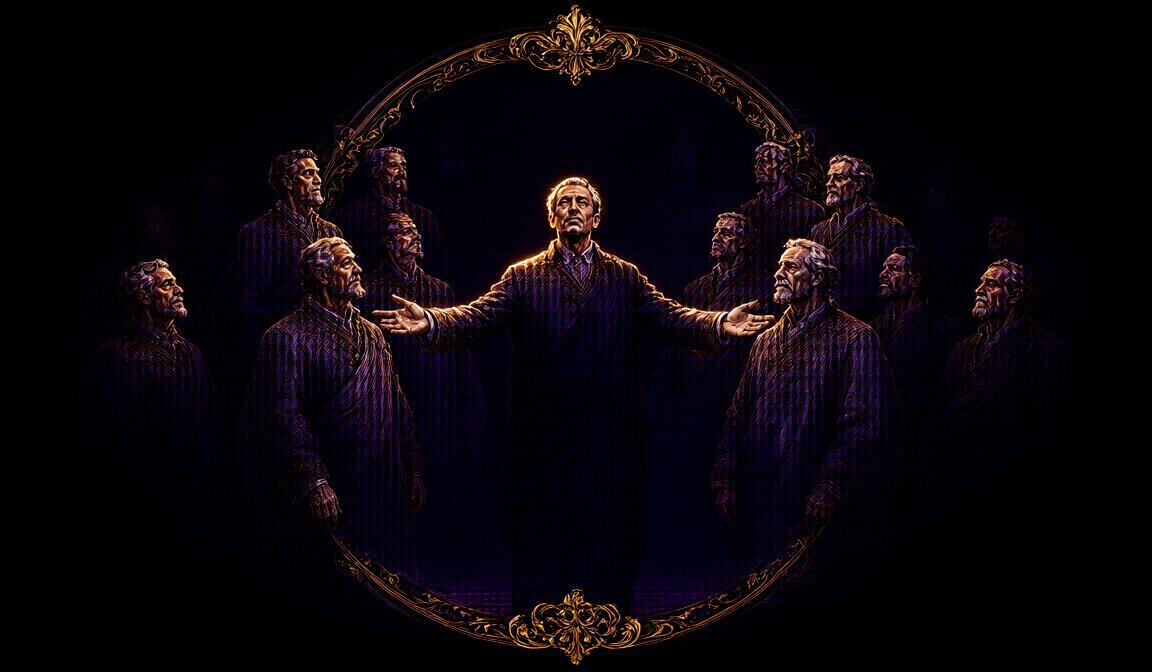 Underskriften är ömsesidig — den nya medlemmen tas emot av kretsen.
Through this agreement, the Living Nation approves the signatory party Rune Rullgrus as co-owner.
Joining is not a one-sided act. The same signature that expresses the signatory's intent also carries the Nation's acceptance — the community, through this document, recognises the person as a full co-owner.
Recognition cuts both ways. On the signatory's side it converts a private wish into a real standing with rights and duties; on the Nation's side it creates a commitment to receive, support and protect the new co-owner. §3 is the handshake that turns a declaration into membership — and the point from which participation in governance, benefits and shared work becomes real.
 Bok, nyckel och sigill — personen får ett namn och ett spår i registret.
Through this agreement, the signing party is now known to the Living Nation and has been entered in the Book of the Living with a created Living key and registered in the Living Nation's system, along with their chosen name and seal for their ownership.
Approval is then made concrete and traceable. The co-owner is entered in the Book of the Living, a Living key is created, and a chosen name and seal are recorded as marks of ownership.
Three functions are packed into this one paragraph: identity (the key says who you are), access (the key opens what is yours), and authorship (the name and seal let your acts and agreements be recognised as yours). Registration is what makes membership verifiable and repeatable rather than informal — it is the difference between being known and merely being present. It mirrors Constitution §6, where the Living key ties names, sigils and values to a living body and mind.
 Självägandet kommer före avtalet — människan äger sig själv först.
The signatory is a living human being and the fully owner of themselves.
This is the pivot of the whole agreement. The signatory is not a resource being sold or a party being acquired — they are a living human being who already fully owns themselves. Sovereignty over one's own person is the starting position, not a concession granted by the Nation.
Everything else must be read in that light: joining cannot diminish the self-ownership it presupposes. It is the same premise as Constitution §2, where self-ownership is limited only by valid agreements or judgments. §5 therefore protects the person at the root of the contract and clarifies that only a self-owner can freely give, keep or enter agreements concerning themselves.
 Den som godkänns ska vara den de utger sig för att vara.
For the approval of the parties, the signing party has required that they are who they claim to be.
Approval in §3 and registration in §4 are only meaningful if they attach to a real and correctly identified person. §6 requires that the signatory be verified as being who they claim to be before those acts take effect.
The clause protects everyone involved: it prevents impersonation, keeps the roll of co-owners trustworthy, and ensures that duties and rights land on the right individual. Verification is the honesty-check that lets everything else — the seal, the key, the vote — be relied upon by others. It rhymes with Principle 18, where only demonstrable, proven truths count as proof.
 Tre godkännande parter prövar samfällt att sinnet är klart.
The three approving parties have made the unanimous assessment that the signing party is of sound mind when entering into this agreement.
Because §2 stakes the signatory's conscious mind, the contract guards that mind explicitly. Before the agreement stands, the three approving parties — Sune, Berit and Lindor — must unanimously find the signatory of sound mind at the moment of entry.
This does two things. It confirms a capacity to understand and consent, which is what makes the agreement genuine rather than merely signed; and it protects the signatory from being taken advantage of at a weak moment. Unanimity, not majority, raises the bar: all three must be satisfied. It applies the free-will-and-sound-mind condition found among the seven criteria for valid agreements (Principle 15).
 Den enskilde behåller kontrollen — gemenskapen garanterar rättigheterna.
Through this agreement, the signing party has full control over themselves and can defend their own rights. The Living Nation jointly now guarantees all the rights of the signing party as a sovereign individual and full co-owner.
Two guarantees are given at once. First, the co-owner keeps full control over themselves and the standing to defend their own rights — membership does not absorb the individual. Second, the Nation jointly guarantees those rights, treating the person as a sovereign individual and full co-owner.
The pairing is the point: autonomy is not left to the individual alone, and mutual defence is not allowed to override self-control. Rights are held personally and backed collectively. This is the equity the community commits to — the same mutual protection expressed in Principle 5 (right of defence) and made operational through the jury court of Principle 17.
 Att fritt erbjuda sitt, och att ta del av andras.
Through this agreement, the signing party has the right to freely act and offer what they provide. At the same time, the party can take part in everything that other co-owners provide within the Living Nation.
Co-ownership is also an economic freedom. Each co-owner may freely act and offer whatever they provide — goods, services, craft, skill — without needing permission to do so. In return, they may take part in everything the other co-owners provide.
The clause creates a two-sided market inside the community: an outlet for what you make and an open door to what others make. It is the practical engine of self-reliance, and it is stated almost word for word as Principle 22 (Right to Do Business), turning a principle into a contractual right for every member.
 Att lämna är tillåtet — men formellt, skriftligt och utan anspråk.
The signing party may leave this agreement and Living Nation by a written termination signed by three consenting parties. Upon leaving, the signing party renounces all assets and values owned within Levande Nationen.
Membership is voluntary for as long as it lasts. A co-owner may leave, but through a defined form: a written termination signed by three consenting parties. Leaving is a right, exercised transparently rather than by simply walking away.
On departure the leaver renounces all assets and values held within the Nation. This keeps the community's shared pool intact and prevents exit as a way of extracting value; the involvement was contributed, not invested for withdrawal. Compare Constitution §12, which likewise says a co-owner who leaves cannot assert claims to shared values or resources.
 Tre varningar, en jurydom, och uteslutning först som sista steg.
If the signing party acts maliciously against the Living Nation and other owners, they will receive three warnings. If the damage is not compensated according to the verdict in an assigned jury court, the signing party may be excluded from the Living Nation.
Harm to the community is answered in graduated steps, not in a single stroke. A co-owner who acts maliciously first receives three warnings — room to correct course. If the behaviour continues, an assigned jury court weighs the case and sets a verdict on compensation. Only if that compensation is not made may the member be excluded.
The sequence protects both sides: the accused gets notice and a fair hearing before any verdict, and the community gets a defined, evidence-based way to remove a persistent wrongdoer. It is Principle 23 applied contractually, and its reliance on a jury verdict echoes the dispute rules of Principle 6 — redress instead of revenge.
 Att skriva under är att ha läst och godkänt grundlagarna.
The signatory party is fully aware of and accepts through this agreement the constitution and legal principles of the Living Nation (see Appendix 1: Constitution of the Living Nation and Appendix 2: Legal Principles of the Living Nation).
By signing, the co-owner declares that they are fully aware of and accept the two governing frameworks — the Constitution (Appendix 1) and the Legal Principles (Appendix 2). The agreement is bound to those documents rather than standing above them.
The consequence is an informed membership. Rights, duties, decision-making and dispute resolution all take their meaning from these appendices, so acceptance is not a formality but the act that makes the member a knowing participant in a shared rule-set. It also gives later disputes a clear reference point: what was written in the constitution and the principles is what the parties agreed to live by.
 Testamente och instruktioner — planen finns redan den dag den behövs.
Through the approving parties, the will and action instructions for the event of the signing party's death have been registered.
The agreement does not end with the member's life unplanned. Through the approving parties, a will and action instructions for the event of death have been registered in advance — a stated plan for how the co-owner's assets and responsibilities within the Nation are to be handled.
This gives continuity on both sides: the member's wishes are known and carried out rather than guessed at, and the community avoids the disputes and ambiguity that unrecorded wishes create. It is the contractual form of Principle 15's seventh criterion, under which a valid agreement must contain a will stating heirs, interim administration and closing conditions — foresight written into the document itself.