Living Nation
Fördjupning · Lawful Principles

Rättsprinciperna

The 23 Lawful Principles — the ground law of the Living Nation

Tre oberoende lager i ett dokument: den ursprungliga ordalydelsen, en verkligt fördjupande förklaring på engelska — och en bild för varje princip. Inte lagar som tilldelas ovanifrån, utan principer som upprätthålls underifrån.

23 principerOriginaltext Original textPlain English explication Illustrationer
Översikt · Overview

Principer, inte lagar

Varför principer i stället för lagar

Lagstiftning är reaktiv: den skrivs efteråt, av någon som står över den, och den bygger på antagandet att människor behöver en herre. De lagenliga principerna vänder på det. De är universella rättigheter som människan äger i kraft av att vara född — inte i kraft av medborgarskap, tillstånd eller register.

Där lag och princip hamnar i konflikt ger Levande Nationen principen företräde. Det är själva poängen: ett fåtal klara, ömsesidiga regler som en människa kan hålla i minnet och pröva mot sitt eget samvete — i stället för en växande flod av bestämmelser som ingen kan överblicka och som ändå alltid gynnar den som skrev dem.

Var och en av de 23 presenteras här med samma tre delar: den ursprungliga engelska ordalydelsen, en fördjupande förklaring av vad den betyder och gör, och en bild som fångar principen.


01 Principle 1

Non-Domination Principle

Original text · Lawful Principles Do not harm people, property, or nature.

This is the floor on which every other principle stands. Before any right is claimed or any authority exercised, one duty comes first: do no harm. It is deliberately simple, and that is its strength — it needs no interpreter, no permit and no authority to be understood.

Harm here is not only the visible wound. It reaches into the three things a life is made of: people (body, mind and livelihood), property (what a person has lawfully made or holds), and nature (the land, water and living space that sustain everyone). Neglect and exploitation count, not just assault and theft. Pollution is harm. Quietly ruining someone's ability to use what is theirs is harm.

The principle is negative by design. It does not license a system of permissions, inspections and gates — it assumes that a person is free to act, and stops only where another person's life, property or living space would be damaged. Freedom is the default; harm is the limit.

In practice: Before you act, ask who carries the cost of what you are about to do.

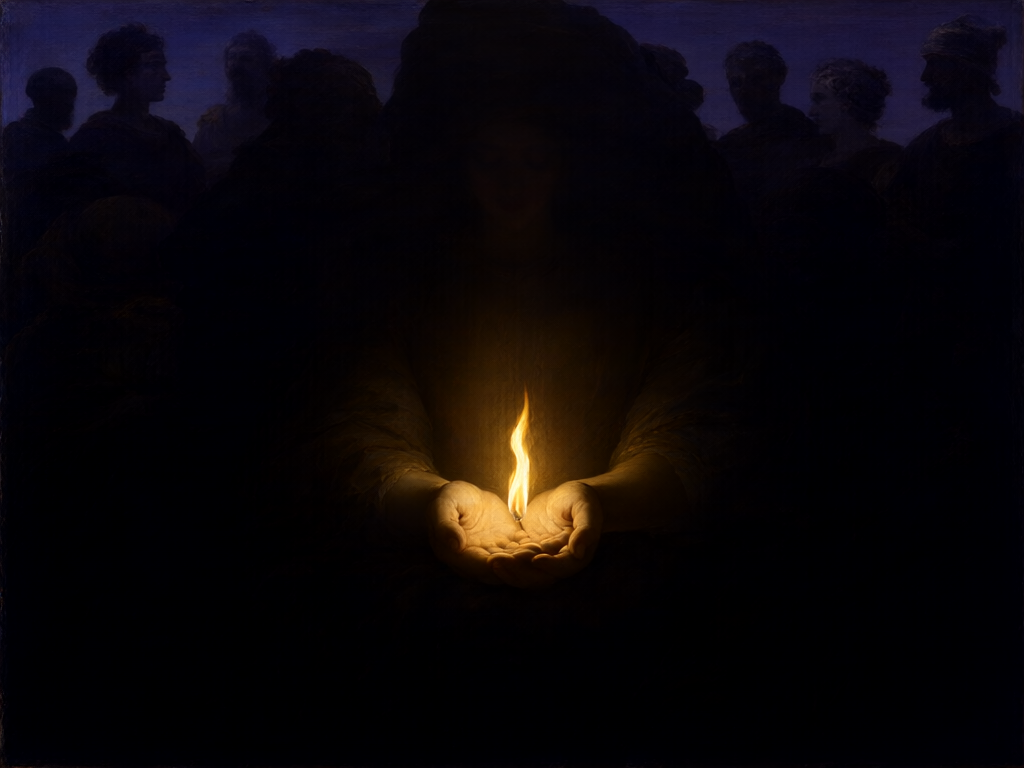
Illustration for Principle 1: Non-Domination Principle
Illustration · Principle 1 — Non-Domination Principle
02 Principle 2

Golden Rule

Original text · Lawful Principles Only do unto others as you would have them do unto you.

The first principle says what you may not do. The second says how you should act. Together they form a pair: one draws the outer limit, the other sets the inner standard.

The Golden Rule is a demand for empathy made practical. It asks you to imagine standing in the other person's place and to judge your own conduct from there — not from your intention, but from how it lands. It is the human answer to a world of unequal power: the strong are asked to measure themselves by what they would accept in the weak man's position.

It is also reciprocal. What you demand as your own right, you owe to others in the same measure. A community that keeps this principle needs fewer courts, because fewer wrongs are committed in the first place.

In practice: Would I accept this treatment if the positions were reversed?

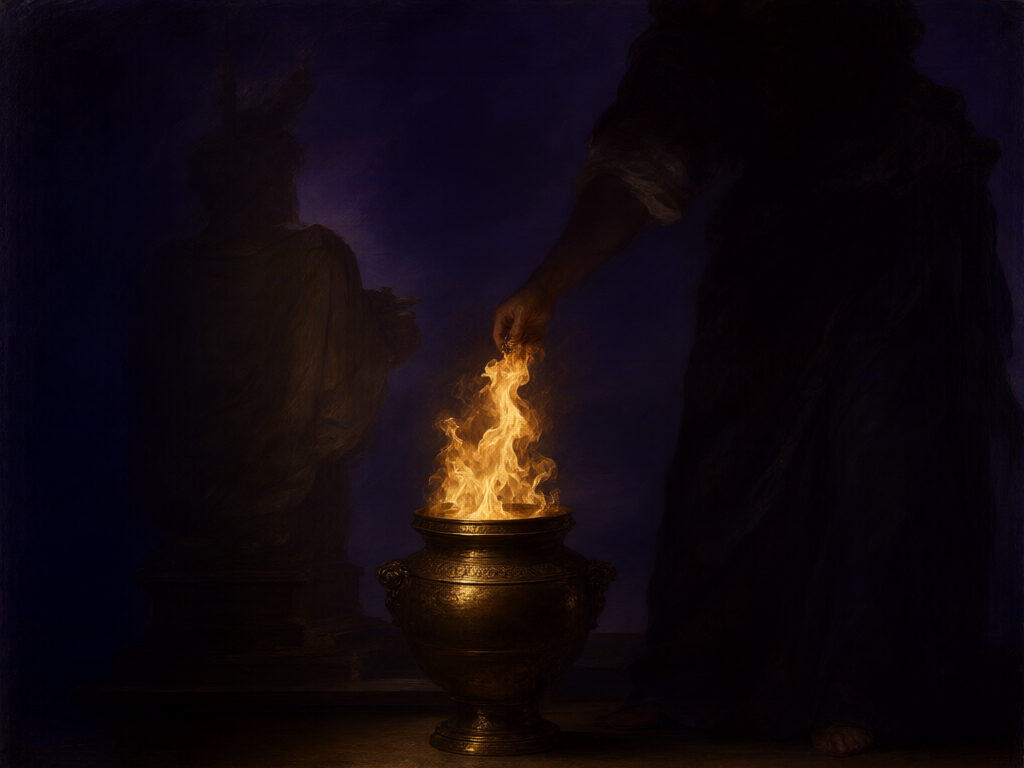
Illustration for Principle 2: Golden Rule
Illustration · Principle 2 — Golden Rule
03 Principle 3

Rights Preservation Principle

Original text · Lawful Principles Whoever acts to prevent a man or woman from freely engaging with the earth upon which they were born, loses their own rights.

Rights in the Living Nation are not granted by a state, an office or a licence. They attach to a person by the plain fact of being born on the earth. This principle protects exactly that: the freedom to live, work, build, draw water and raise a family on the ground you were born to.

Its remedy is severe and symmetrical. Whoever takes away another's ability to engage freely with the earth does not merely commit an offence — they forfeit their own standing. The one who closes the gate loses their own key. This is not vengeance; it is deterrence rooted in reciprocity, and it is what makes the freedom real rather than rhetorical.

Notice what it does not say. It does not require anyone to be given land. It requires that no one be prevented from engaging with the earth they were already born upon — through enclosure, blockade, coercion, debt or force.

In practice: The land you were born to live from cannot be gated against you.

Illustration for Principle 3: Rights Preservation Principle
Illustration · Principle 3 — Rights Preservation Principle
04 Principle 4

Collective Decision-Making

Original text · Lawful Principles At least three individuals must fully agree on any decision affecting an individual, including witnesses if necessary.

No single person may decide the fate of another. Where a decision touches someone else's life, property or standing, it must rest on the full agreement of at least three individuals — and where the matter is contested, on witnesses whose word can be tested.

This removes the seat of arbitrary power. A lone ruler, however wise, is structurally distrusted; a captured council of two can still be one person's tool. Three, agreeing fully and openly, is the smallest structure in which self-interest is checked and a decision can be witnessed. It is cumbersome on purpose: friction is the price of not being governed by one person's mood.

The requirement is for agreement, not a majority. Three who 'fully agree' carry a different weight from three votes counted — the principle asks for consensus that each participant would stand behind, and for witnesses when the matter is grave.

In practice: Never one voice alone over another's life.

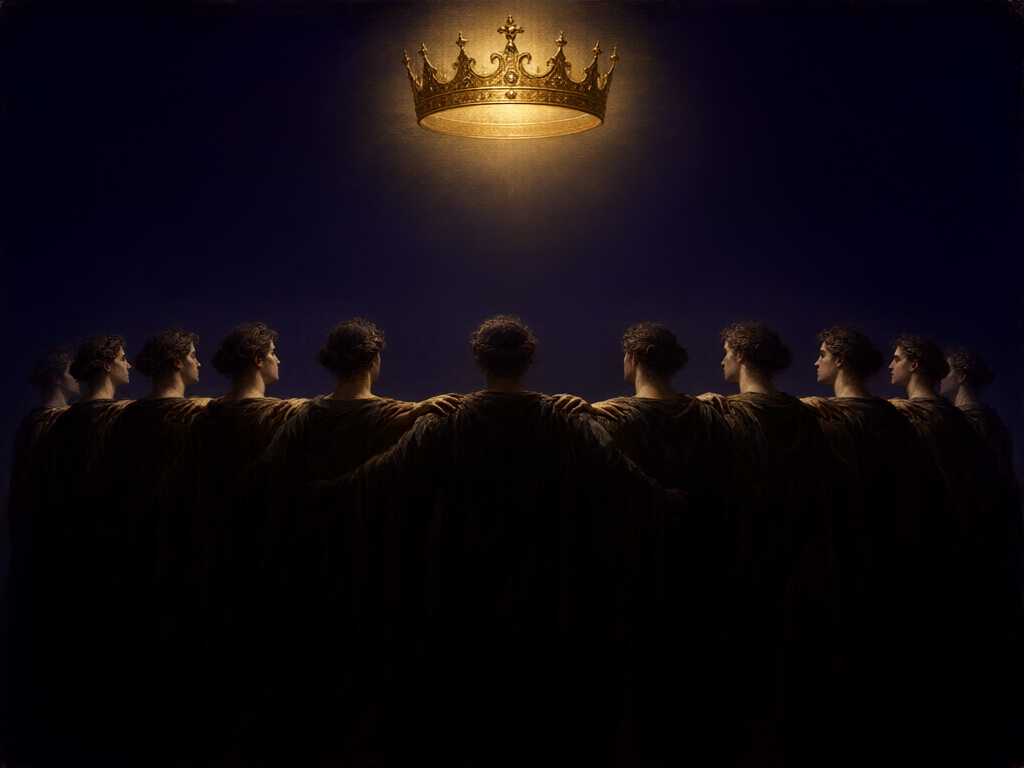
Illustration for Principle 4: Collective Decision-Making
Illustration · Principle 4 — Collective Decision-Making
05 Principle 5

Right of Defense

Original text · Lawful Principles a. Everyone has the right to defend themselves, their family, and their property. b. As well as to possess necessary weapons and protective devices for this purpose.

Defence is recognised here as a right that belongs to a person before any authority exists to grant or withdraw it. You do not need permission to protect your own life, your family or what you hold lawfully — the right is inherent and it is always available.

The second limb is deliberately plain: if defence is a right, the means of defence must be lawful too. Necessity and proportion are the measure — what is genuinely needed to stop a concrete threat to self, family or property. A right that could only be exercised with permission, or with means that were denied, would be a right on paper.

The principle covers the whole span of protection: body, household and property. It sits alongside the Golden Rule and the non-harm rule, so defence is bounded by them — it answers force, it does not create it.

In practice: Defence of self, family and home is inherent, not licensed.

Illustration for Principle 5: Right of Defense
Illustration · Principle 5 — Right of Defense
06 Principle 6

Redress through Jury Verdict

Original text · Lawful Principles a. Violation of property, honor, or social status does not entitle the affected individual to revenge. b. Instead, a valid jury verdict must unanimously determine what redress is warranted.

When someone is wronged — a theft, a slander, an injury to reputation or standing — the injured party is expressly denied the right to take revenge. This is one of the hardest demands the principles make: it separates the feeling of being wronged from the authority to punish.

In its place stands a verdict. Only a jury, reaching its decision unanimously, may determine what redress is warranted. Unanimity is what gives the verdict its lawful force: a decision that even one peer would refuse cannot bind. And because the remedy is decided by that verdict, it is measured and proportionate rather than inflamed.

Together, the two limbs make private vendetta unlawful and public justice the only road. That protects the wronged person as much as the wrongdoer — endless retaliation destroys the life of the one seeking it.

In practice: Grievance goes to a jury — never to private retaliation.

Illustration for Principle 6: Redress through Jury Verdict
Illustration · Principle 6 — Redress through Jury Verdict
07 Principle 7

No Ownership of Living Individuals

Original text · Lawful Principles No one can own a living man or woman.

This is the shortest principle and the one with no exceptions. A living human being is never property. Not by contract, not by debt, not by judgement, not by birth, not by purchase — not by any document anyone can write.

It follows from principle 13, which holds that ownership is a faculty of living persons and that a person cannot be an object of ownership. Where any legal instrument appears to make one person the property of another, the instrument is void on its face, whatever court produced it.

The principle is deliberately worded 'living man or woman'. It guards the person, not the ceremony — no title, however ancient or solemn, can survive contact with this line.

In practice: No contract, debt or court can turn a person into property.

Illustration for Principle 7: No Ownership of Living Individuals
Illustration · Principle 7 — No Ownership of Living Individuals
08 Principle 8

Global Movement Rights

Original text · Lawful Principles a. Each person born on Earth has the right to stay and travel on the entire planet. b. To settle and lead one's life on foreign land, one must have signed a valid contract to do so.

Birth on Earth is taken as the source of a planetary right of movement. A person may stay where they are and travel across the whole planet — the right is born with them and does not depend on anyone's permission to leave or return.

The second limb draws the boundary between travelling and settling. To lead your life on land that belongs to others — to take up permanent residence in another's community — you must have signed a valid agreement to do so. This mirrors principles 3 and 9: the earth is open to those who journey across it, while the settled life of a community is entered by consent on both sides.

So movement is a right, and settlement is an agreement. Neither party is a supplicant: the traveller is not a criminal, and the community is not a gatekeeper — they meet through contract.

In practice: Travel freely; settle by agreement.

Illustration for Principle 8: Global Movement Rights
Illustration · Principle 8 — Global Movement Rights
09 Principle 9

Freedom of Belief

Original text · Lawful Principles a. Everyone is free to believe what they want. b. Harm inflicted on others based on belief will be punished more severely.

Belief is placed beyond the reach of law. What a person holds in mind and conscience is their own; no authority may dictate, examine or punish it. There are no thought crimes here, and no orthodoxy to conform to.

The second limb closes the obvious loophole. Liberty of belief is not a shield for conduct. When a belief is used to justify harm to others, the offence is aggravated — punished more severely than the same harm without that pretext. Conviction does not lower the bar; it raises it.

Taken together, the two halves are exact: absolute freedom of conscience, and stricter accountability the moment conscience is used as an excuse to injure someone.

In practice: Your beliefs are entirely yours — and so are your harms.

Illustration for Principle 9: Freedom of Belief
Illustration · Principle 9 — Freedom of Belief
10 Principle 10

Endangerment and Punishment

Original text · Lawful Principles a. Endangering others is not a crime. b. But if harm occurs as a result of endangerment, the crime is punished more severely.

Creating risk, by itself, is not a crime. People are free to act, build, travel and take chances; a community that criminalised every dangerous situation would smother ordinary life and empower inspectors to punish worry rather than wrong.

But the principle does not excuse recklessness. Where the endangerment actually results in harm, the offence is punished more severely than if no risk had been involved. The person who ignored the danger, and then caused the injury, answers for more than the injury alone.

The distinction is between the possibility of harm and its realisation. Freedom is preserved on one side, and accountability sharpened on the other: you may take the risk, but you own the outcome.

In practice: Free to take the risk — responsible for the outcome.

Illustration for Principle 10: Endangerment and Punishment
Illustration · Principle 10 — Endangerment and Punishment
11 Principle 11

Knowledge and Truth

Original text · Lawful Principles a. All knowledge belongs to humanity. b. Withholding the truth and misleading others so that people or living space are harmed is a serious crime.

Knowledge is held to be a commons, not a private estate. What is known about the world, about health, land, food, money and danger belongs to humanity as a whole — it is discovered into a shared inheritance, not invented as private property.

From that follows a duty. To withhold the truth, or to mislead deliberately, so that people or living space are harmed is a serious crime — the gravest class, not a mere irregularity. The health warning kept quiet, the contamination concealed, the financial truth buried: each is an attack made with silence.

The principle does not demand that everyone speak constantly. It demands that what you hold and what others need not be used as a weapon through concealment.

In practice: Never bury the truth that others need.

Illustration for Principle 11: Knowledge and Truth
Illustration · Principle 11 — Knowledge and Truth
12 Principle 12

Right to Provide Services

Original text · Lawful Principles Proven excellence in knowledge and practice entitles an individual to provide specific services or perform tasks of that kind within their profession.

Standing to serve comes from competence itself. Where a person has proven excellence — in knowledge and in practice — they are entitled to offer that service and to carry out its tasks in their profession. The warrant is the demonstrated skill, not a paper issued by a bureau.

This tilts the whole question of authority. In many systems you may not help others until someone licenses you to; here you may not be stopped from helping once you have shown, in practice, that you can. Proof comes from the work and from those who have seen it.

It also respects the boundary between professions: the entitlement is to the specific services and tasks in which excellence has been shown — the demonstrated craft, extended to its proper field.

In practice: Competence, shown in practice, is the credential.

Illustration for Principle 12: Right to Provide Services
Illustration · Principle 12 — Right to Provide Services
13 Principle 13

Property Ownership

Original text · Lawful Principles a. The ability to own property is considered a fundamental right of living individuals. b. Only living men and women can claim ownership; non-living entities such as corporations or legal fictions can never independently hold ownership rights. c. Various methods are recognized for establishing and proving ownership, including creation, lawful registration, purchase, gift/inheritance, claimed discovery and claimed possession.

The capacity to own is a faculty of living people. It is a fundamental right, and it belongs to men and women — to persons who can hold, use, protect and answer for what is theirs. Ownership is a human socio-economic construct, but the one who owns is always a living human being.

Non-living entities are tools, not owners. A corporation, a trust, a legal fiction registered with the state can manage and hold assets through the humans who direct them, but it can never independently own anything. Where the fiction claims ownership in its own name, it is claiming what only a person can hold.

The principle also names how ownership is established and proven: by creation, by lawful registration, by purchase, by gift or inheritance, by claimed discovery where no one else has proven a claim, and by claimed possession. Each is a recognised road to title — and each must be shown, not assumed.

In practice: Property belongs to living persons; entities hold at most on their behalf.

Illustration for Principle 13: Property Ownership
Illustration · Principle 13 — Property Ownership
14 Principle 14

Ownership in family

Original text · Lawful Principles a. Biological parents always own their children until they prove themselves mature enough to own themselves. b. Adult children own and are responsible for their parents as long as the parents live.

The family is described here as a cycle of custody and care. Parents who have brought a child into the world hold that child in trust — 'own' in the sense of responsibility and protection — until the child proves mature enough to own themselves. The measure is maturity demonstrated, not a birthday.

The cycle then turns. Adult children own and are responsible for their parents for as long as the parents live. The duty of care runs in both directions, and neither generation is left without a claim on the other.

Seen whole, the principle refuses to treat any family member as a thing: the child is held in custody, not as property; the parent in age is cared for, not discarded. It is responsibility expressed as belonging.

In practice: Care flows in both directions, across the generations.

Illustration for Principle 14: Ownership in family
Illustration · Principle 14 — Ownership in family
15 Principle 15

Valid Contract Criteria

Original text · Lawful Principles A valid contract must fulfill the following seven criteria: a. a clear and specific offer or proposal, with a commitment to follow through; b. a clearly defined exchange of value between the parties (goods, services, money or other mutual benefits); c. adherence to the constitution and lawful principles; d. all parties entering voluntarily, with clear understanding and of sound mind; e. full agreement on all terms and conditions, including interpretation and implications, without ambiguity; f. disputes over validity or enforcement may be brought before a jury court; g. the contract must contain a will where heirs, interim administration and contract closing conditions are stated.

Every binding agreement in the Living Nation must pass through seven gates. None of them is decoration; each one exists because leaving it out is how agreements become instruments of capture.

There must be a real offer and a real commitment to it. There must be a defined exchange of value — something given for something given, in goods, service, money or mutual benefit. The terms must conform to the constitution and the lawful principles, so no agreement can legalise what the principles forbid. All parties must enter freely, understanding what they are signing, of sound mind. They must agree on every term and on what it means, with no ambiguity left to be exploited later.

Then the two closing requirements: if the validity or enforcement of the contract is disputed, the matter may go to a jury court for resolution — and the contract must contain a will, stating heirs, interim administration and the conditions under which it closes. An agreement must say what happens when it ends.

In practice: Seven tests — miss one, and it is not a binding agreement.

Illustration for Principle 15: Valid Contract Criteria
Illustration · Principle 15 — Valid Contract Criteria
16 Principle 16

Outside Influence Prohibition

Original text · Lawful Principles Outside parties can never influence or have a part in a contract.

A contract belongs to the people who signed it. No outside party — a stranger, a creditor, a lobbyist, an official, an interested third person — may influence it or have any part in it. Only the parties named and registered in the agreement may shape its terms.

The rule is a strong one, because the ways a third party can reach into an agreement are many: through pressure, through money, through the offer of advantage, through quiet intermediation. Each is a violation, not a nuance. If a person is not named in the contract, they have no standing over it.

What the principle protects is integrity. An agreement shaped by someone who bears none of its consequences is no longer an agreement between the parties — it is an instrument held by someone else.

In practice: No unnamed person steers an agreement.

Illustration for Principle 16: Outside Influence Prohibition
Illustration · Principle 16 — Outside Influence Prohibition
17 Principle 17

Legal Pretext

Original text · Lawful Principles What is unlawful ought not be entered under the pretext of legality.

Form is not the same as right. This principle denies the classic move by which an unjust act is dressed in lawful clothes — 'for the public benefit', 'by order', 'under authority', 'as permitted by statute' — and then treated as legitimate because the paperwork is in order.

The test is not whether the act can be described as legal, but whether it is lawful in the sense the principles mean: does it harm, does it take another person's rights, does it violate an agreement? If so, no amount of procedural correctness redeems it.

The principle is a standing warning against institutional self-justification. Legality is a description of a process; it is never a defence for an outcome the principles forbid.

In practice: Lawful form does not make a wrong action right.

Illustration for Principle 17: Legal Pretext
Illustration · Principle 17 — Legal Pretext
18 Principle 18

Credibility Measure

Original text · Lawful Principles Sacrifice is the measure of credibility. No willingness to sacrifice means no liability, responsibility, authority, or measure of conviction.

Words are cheap, and they are cheap precisely because they cost the speaker nothing. This principle supplies the test: what a person is willing to put at stake is the measure of what they actually believe and actually stand behind.

Where there is no willingness to sacrifice, there is no liability, no responsibility, no authority and no measure of conviction. Someone who risks nothing for their promise carries no weight when they make it — and no standing to speak with authority over others.

Turned around, it becomes a rule of trust and of rule itself. Weight your own reliance on people by what they have staked, and judge the authority claimed by any person by what they would lose if they were wrong.

In practice: Weigh a promise — and an authority — by what its holder stands to lose.

Illustration for Principle 18: Credibility Measure
Illustration · Principle 18 — Credibility Measure
19 Principle 19

Contract as Law

Original text · Lawful Principles A contract is a law between the parties and must be accepted through non-denial.

Among the people who made it, a contract is law. It is not merely a private note or a promise kept as a matter of courtesy: once validly formed it governs the relationship and binds those who are party to it as surely as any statute binds a citizen.

The second half of the principle names how acceptance works. A contract is accepted through non-denial — by not objecting to it. The one who stays silent when the terms are put does not get to say, later, that they never agreed.

This is why the seven criteria of principle 15 and the reciprocity of principle 6 matter so much: what is treated as law must have been offered clearly, and the yardstick for objection must have been plain. Silence only binds where there was a fair chance to speak.

In practice: What binds the parties is the agreement itself, accepted by not denying it.

Illustration for Principle 19: Contract as Law
Illustration · Principle 19 — Contract as Law
20 Principle 20

Jury Court Power

Original text · Lawful Principles A jury court of equals has the highest lawful power.

The highest lawful power in the Living Nation is not an office, a throne or a written constitution: it is a jury court of equals. When peers assemble to judge a matter, their decision is the final lawful word.

This is what closes the system. Every earlier principle — no harm, no revenge, no ownership of persons, unanimity in redress, contracts as law — must in the end be applied by somebody. The someone is not a ruler but a jury of equals, drawn from those affected by the case.

Nothing stands above that court, because nothing should: a power higher than the assembly of equals would be a power over them. The principle is the reason the Living Nation can dispense with the pyramid of authority that other systems need.

In practice: The final word belongs to the equals — not to an office.

Illustration for Principle 20: Jury Court Power
Illustration · Principle 20 — Jury Court Power
21 Principle 21

Proof Standards

Original text · Lawful Principles Simulation is never proof. Only demonstrable, proven truths are acceptable.

This principle draws a hard line between representation and reality. A simulation — a model, a projection, a scenario, a plausible reconstruction — is never proof. However sophisticated or persuasive, it remains a picture of the world, not the world.

Only demonstrable truth is accepted: what can be shown, tested and seen to be so. In a legal matter, that means the measured sample, the verified record, the witness who saw. In science, the real trial and the real outcome. In governance, evidence rather than forecast.

The rule exists because models are the easiest way to mislead an honest mind. A claim that cannot be demonstrated is not a weak claim — it is not evidence at all, and it cannot ground a decision.

In practice: Show it real, or it has not been shown.

Illustration for Principle 21: Proof Standards
Illustration · Principle 21 — Proof Standards
22 Principle 22

Right and Fraud

Original text · Lawful Principles Right and fraud never coexist.

A right and a fraud cannot occupy the same act. Where a claim rests on deceit, it is not a right whatever it is called — the deception strips it away and leaves nothing lawful behind.

The principle is absolute because the alternative is absurd: a right that could be asserted by trickery would dissolve the very idea of right. Fraud does not weaken a right; it removes it, and it makes the one who used it answerable for the wrong.

Practically, it is a filter for every instrument and every transaction. Ask whether any part of the claim depends on concealment or falsehood. If so, the whole of it fails.

In practice: No claim survives the fraud that carried it.

Illustration for Principle 22: Right and Fraud
Illustration · Principle 22 — Right and Fraud
23 Principle 23

Acceptance through Non-Denial

Original text · Lawful Principles He who does not deny accepts.

This is the last principle, and it seals the system. Acceptance of a valid contract, a decision or a claim is given by non-denial: the person who does not deny it accepts it.

It works together with principle 19, which makes a contract law between the parties. If agreement could be withheld forever by simply never answering, no agreement could ever close. Silence therefore counts — but only where the offer was clear and the chance to object was real.

The principle places an equal duty on both sides: to the one who puts terms forward, the duty to state them plainly; to the one who receives them, the duty to speak while there is still time. Who does not deny, accepts.

In practice: Object while you can — silence is counted as agreement.

Illustration for Principle 23: Acceptance through Non-Denial
Illustration · Principle 23 — Acceptance through Non-Denial
Living Nation

Principer som hålls underifrån, inte lagar som ges ovanifrån

Dokumentet i sin helhet, tillsammans med konstitutionen, ägaravtalet och manualen, finns i original bland nationens dokument.

↑