Fördjupning · Levande Kyrka Deep-dive · Living Church

Maria Magdalenas evangelium och Tarot-korten

The Gospel of Mary and the Tarot cards

En undersökning av en möjlig djup koppling: är Tarot de Marseille — den klassiska franska kortleken — en bilderbok över Maria Magdalenas evangelium? Texten om Maria hittades i Berlin-kodexen (P. 8502) och saknar både början och ett stycke i mitten. Vi prövar om kortens ordning kan fylla de tomma sidorna.

An investigation of a possible deep connection: is the Tarot de Marseille — the classic French deck — a picture-book of the Gospel of Mary? The text was found in the Berlin Gnostic Codex (P. 8502) and is missing both its opening and a middle section. We test whether the order of the cards can fill the empty pages.

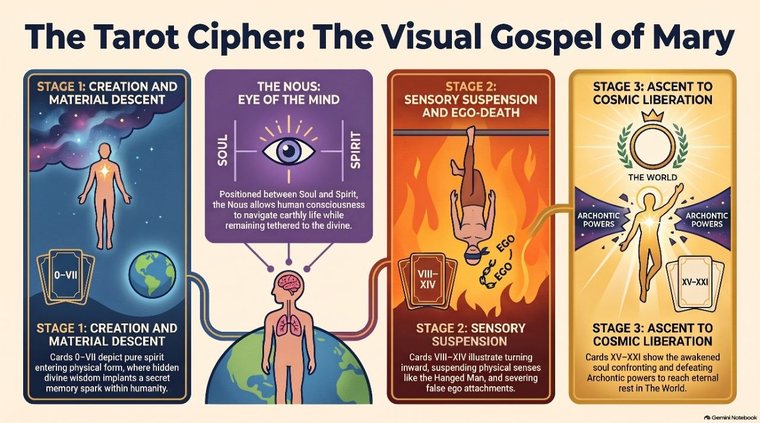
The Tarot Cipher — the visual gospel of Mary

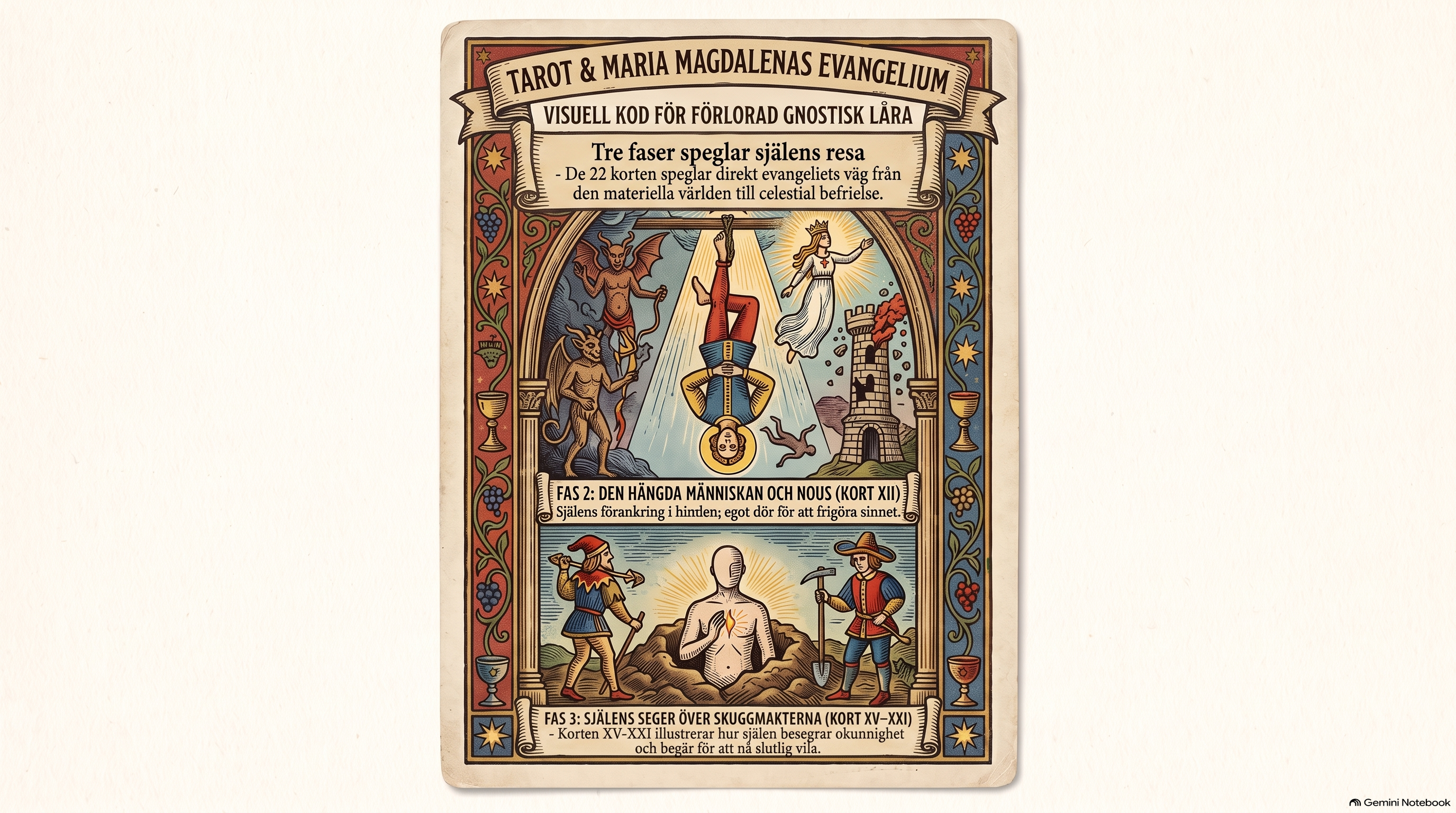
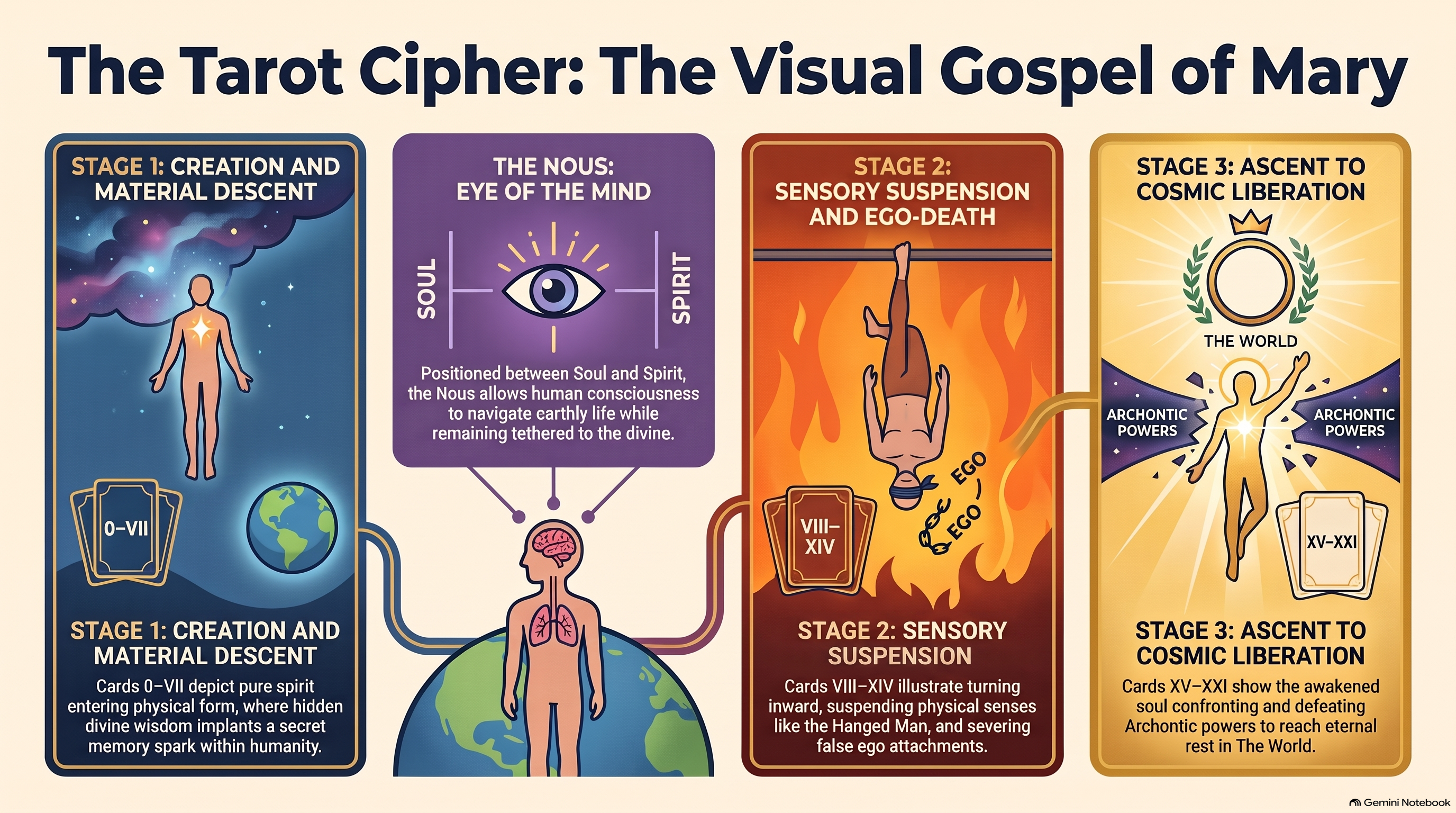
Infografik ur samtalet: Tarot-chiffert — tre steg: skapelse och nedstigning (0–VII), sinnena stillas och egot dör (VIII–XIV), uppstigning till kosmisk frigörelse (XV–XXI).

Infographic from the dialogue: The Tarot Cipher — three stages: creation and material descent (0–VII), sensory suspension and ego-death (VIII–XIV), ascent to cosmic liberation (XV–XXI).

Tesen

The thesis

Utgångspunkten är att de 22 stora arkana (Le Mat till Le Monde) följer samma invigningsväg som evangeliet beskriver: själens nedstigande i materien, den inre vändningen, och uppstigandet förbi "makterna" till vila. Evangeliet är en text, korten en bildsvit — och där texten är borta kan bilderna ha burit minnet vidare.

The starting point: the 22 Major Arcana (Le Mat to Le Monde) follow the same path of initiation the gospel describes — the descent of spirit into matter, the inward turn, and the ascent past the "Powers" to rest. The gospel is a text, the cards a sequence of images; where the text is lost the images may have carried the memory.

Historisk ärlighet

Historical honesty

Vi håller två saker åtskilda. Det vi kan belägga: evangeliet finns i Berlin-kodexen (P. 8502), påträffad i Egypten och köpt 1896, med grekiska fragment från Oxyrhynchus; korten som vi känner dem uppträder i Norditaliens 1400-tal (Trionfi) och standardiseras i Frankrike — Marseille, Lyon, Avignon — under 1500- och 1600-talen. Det vi inte kan belägga: att en kortmakare på 1500-talet satt med just detta papyrus. Det vi däremot ser är en gemensam struktur: samma underjordiska ström av tankar bärs av både texten och bilderna. Korten blir då inte en avskrift utan ett bevarande — ett bildminne för en lära som brändes och förbjöds.

We keep two things apart. What can be documented: the gospel survives in the Berlin Codex (P. 8502), found in Egypt and acquired in 1896, with Greek fragments from Oxyrhynchus; the cards as we know them appear in 15th-century northern Italy (Trionfi) and are standardised in France — Marseille, Lyons, Avignon — in the 16th and 17th centuries. What cannot be documented: a 16th-century card maker working from this papyrus. What we do see is a shared structure: the same underground stream of thought is carried by both text and images. The cards then are not a transcript but a preservation — a visual memory for a teaching that was burned and banned.

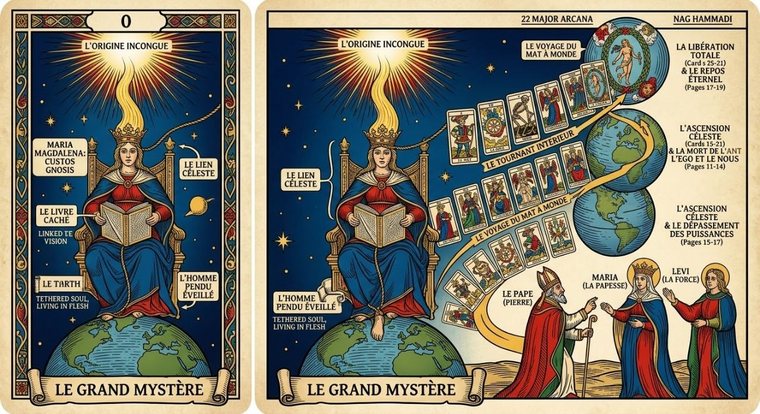
Le Grand Mystère — Maria Magdalena custos gnosis

Infografik ur samtalet: Le Grand Mystère — Maria Magdalena som gnosens väktare, och kortens väg från Le Mat till Le Monde.

Infographic from the dialogue: Le Grand Mystère — Mary Magdalene as keeper of gnosis, and the path of the cards from Le Mat to Le Monde.

De tre septenarierna mot evangeliets gång

The three septenaries against the gospel

KortOmrådeInnehållCardsRealmSubject
Le Mat (0)Omanifest andeSjälens uttåg på sin vandring.Le Mat (0)Unmanifest spiritThe soul setting out on its journey.
I–VIIMateriell och jordiskVärldslig ordning, jordiska härskare, dogm, identitet.I–VIIMaterial & earthlyWorldly order, earthly rulers, dogma, human identity.
VIII–XIVPrövning och inåtvändningDygd, inre kris, offer, egots död, integrering.VIII–XIVTrial & turning withinVirtue, interior crisis, sacrifice, death of the ego, integration.
XV–XXIKosmisk och andligSkuggmakterna, det gudomliga ljuset, frigörelse, vila.XV–XXICosmic & spiritualShadow powers, divine light, liberation, cosmic rest.

Broarna mellan korten

The bridges between the cards

Varje kort räcker sig bakåt mot det föregående och framåt mot nästa. När texten saknas är det i dessa broar vi kan läsa vad som måste ha stått:

Every card reaches backward to the one before and forward to the next. Where the text is missing, these bridges let us read what must have stood there:

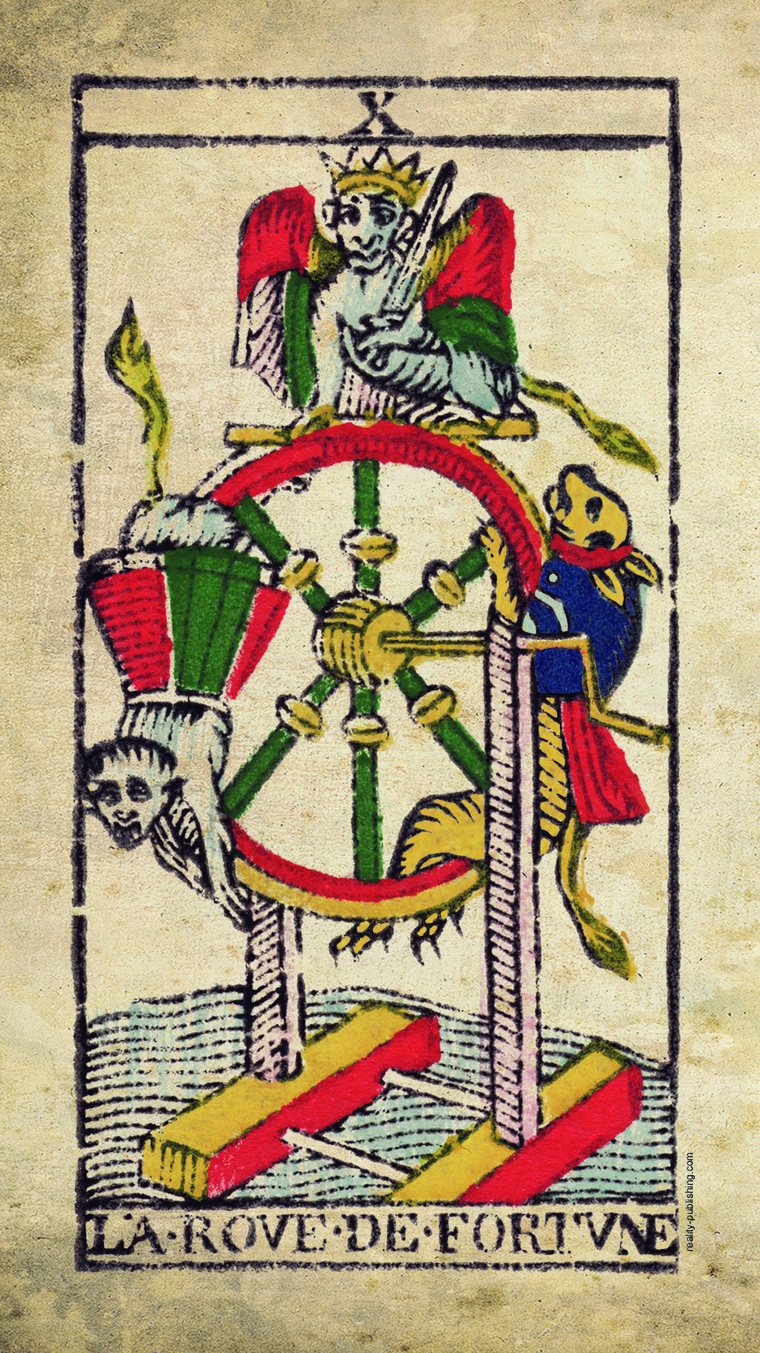
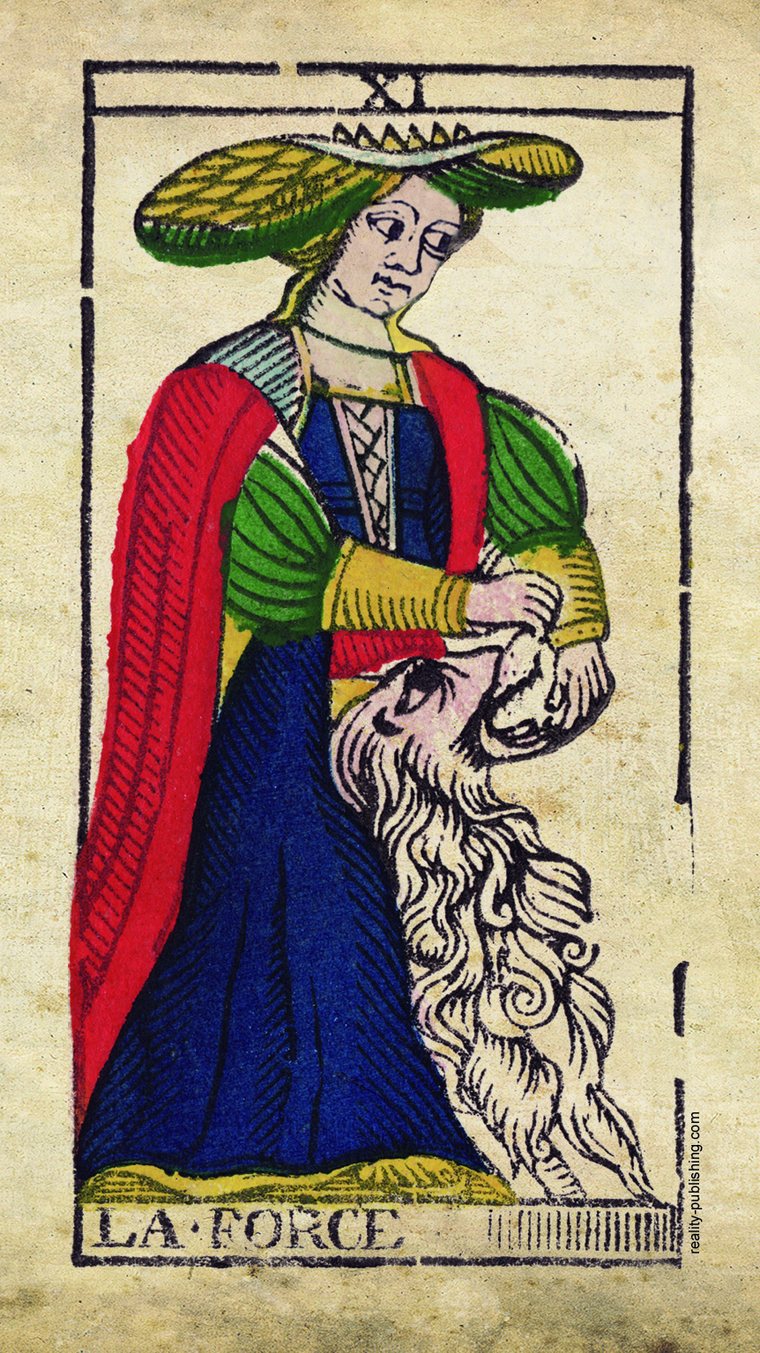
X → XI: Att sluta drivas av ödets hjul till att med mild auktoritet hålla lejonets gap — att äga sina drifter i stället för att styras av dem.

X → XI: from being spun by the wheel of fate to holding the lion's jaws with gentle authority — owning one's drives instead of being driven.

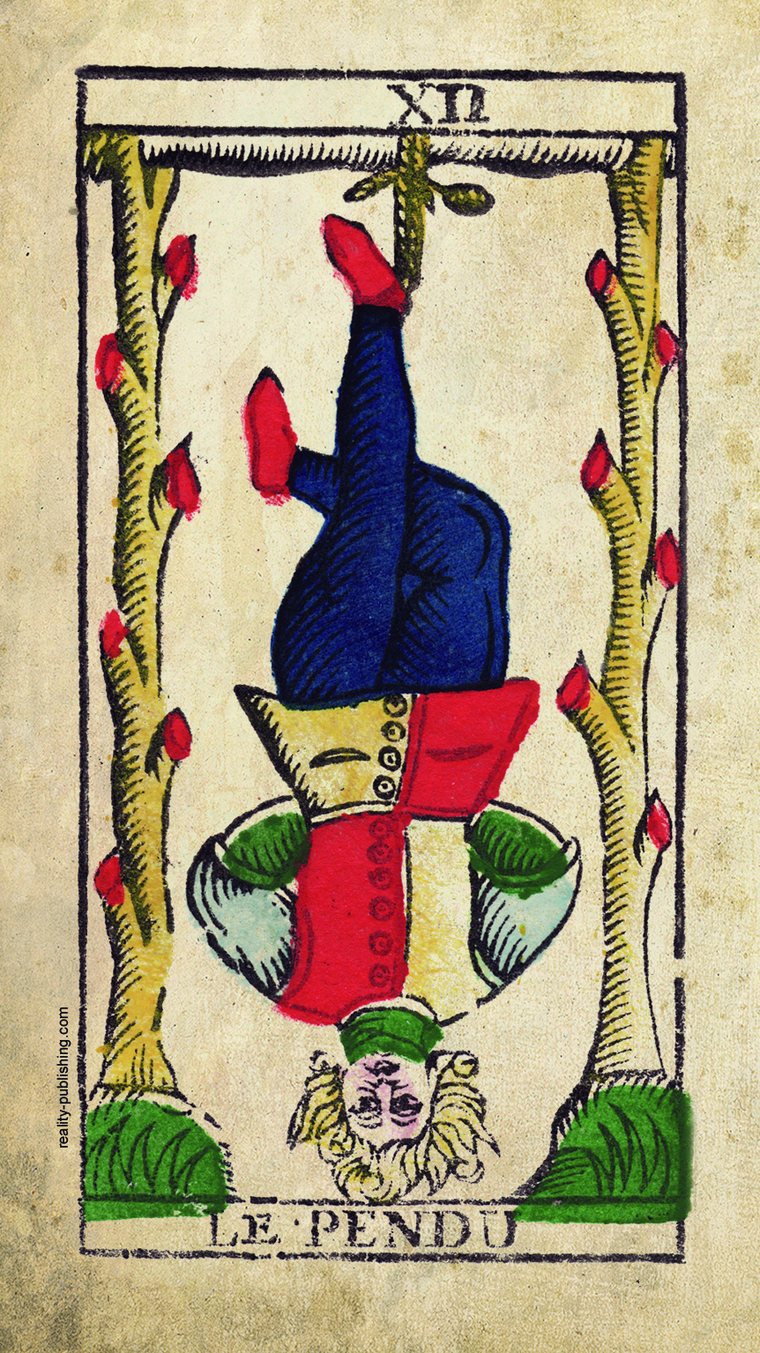
XI → XII: Från aktiv behärskning till frivillig stillhet — Ankaret i det himmelska träet, sinnena vänds upp och ner så att Nous kan se.

XI → XII: from active mastery to voluntary stillness — the anchor in the celestial wood, the senses turned upside down so the Nous can see.

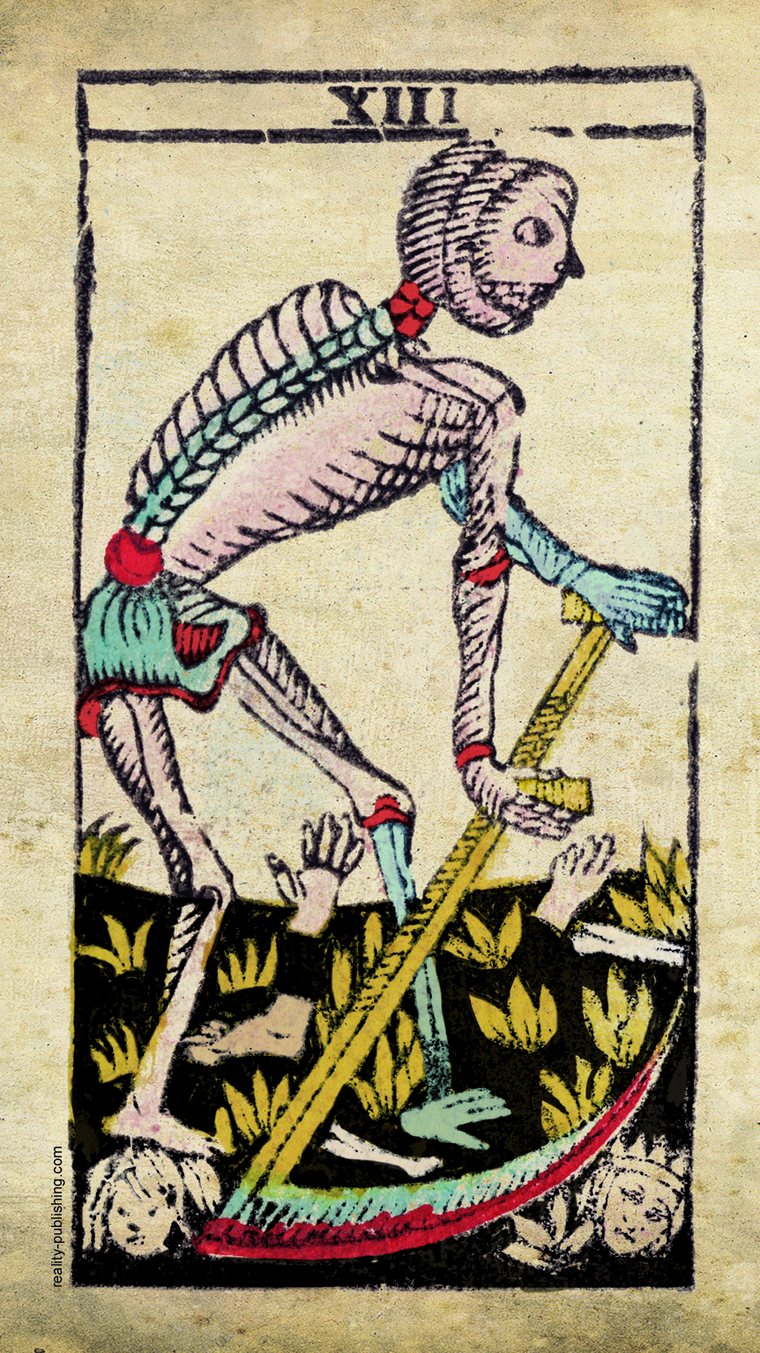
XII → XIII: Från stillhet till skörd — det falska namnet, egots band, skärs bort. Själen kan säga: "Det som band mig är dräpt."

XII → XIII: from stillness to harvest — the false name, the bonds of ego, are cut away. The soul can say: "What binds me has been slain."

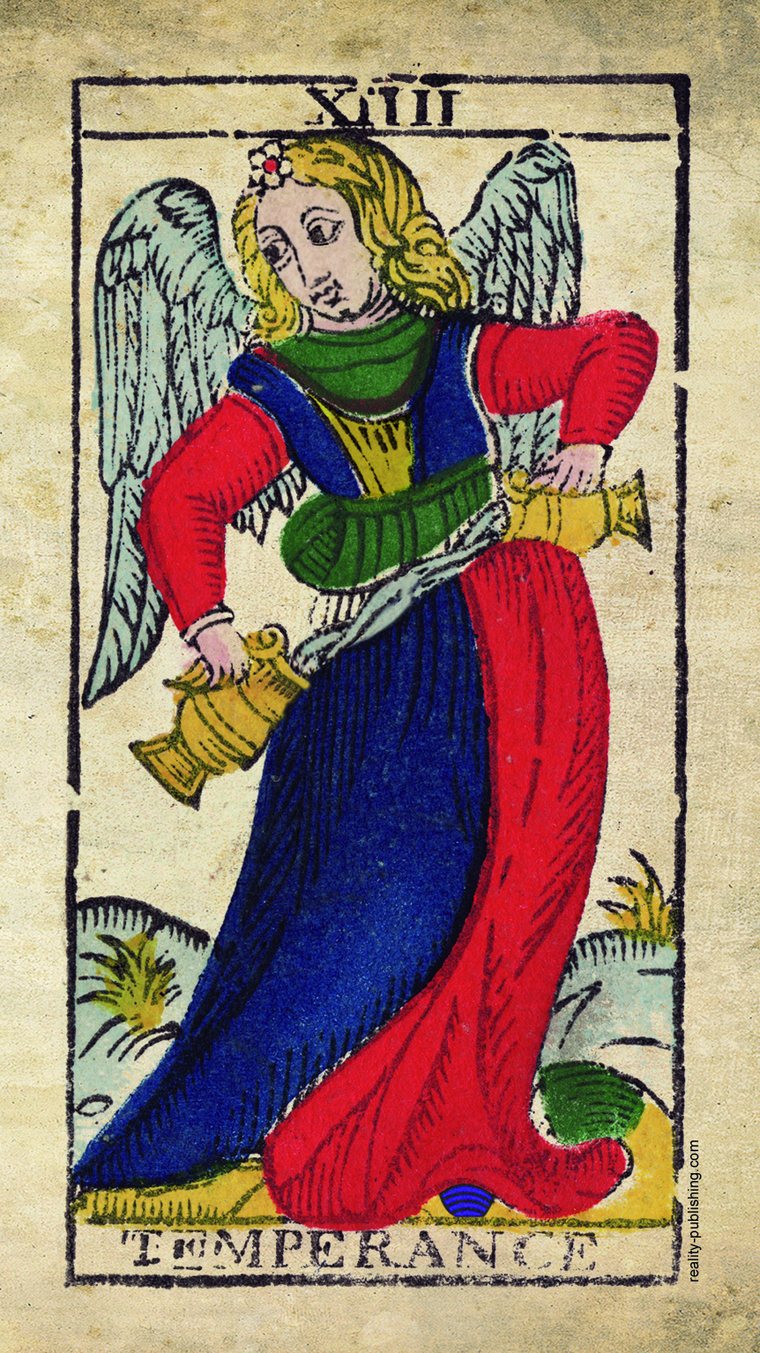
XIII → XIV: Från skelett till ängel — de två kärlen (själ och ande) förenas av Nous till den "vingade farkost" som kan stiga förbi makterna.

XIII → XIV: from skeleton to winged angel — the two vessels (soul and spirit) are joined by the Nous into the "winged vessel" able to rise past the Powers.

Stöd i andra texter

Support in other texts

Det vi rekonstruerar för sidorna 11–14 har stöd i samtida strömmar:

What we reconstruct for pages 11–14 is supported by contemporary streams:

Det återställda manuskriptet

The restored manuscript

Nedan följer den återskapade texten: prologen (förlorade sidor 1–6), det bevarade stycket (sidan 7–10), den rekonstruerade mitten (sidorna 11–14), det bevarade uppstigandet (15–17) och tvisten (17–19). Den engelska texten är ordagrann ur samtalet.

Below is the restored text: the prologue (lost pages 1–6), the surviving passage (pages 7–10), the reconstructed middle (pages 11–14), the surviving ascent (15–17) and the dispute (17–19). The English text is verbatim from the dialogue.

Prolog: den kosmologiska nedstigningen (rekonstruerade sidor 1–6, korten 0–VII)

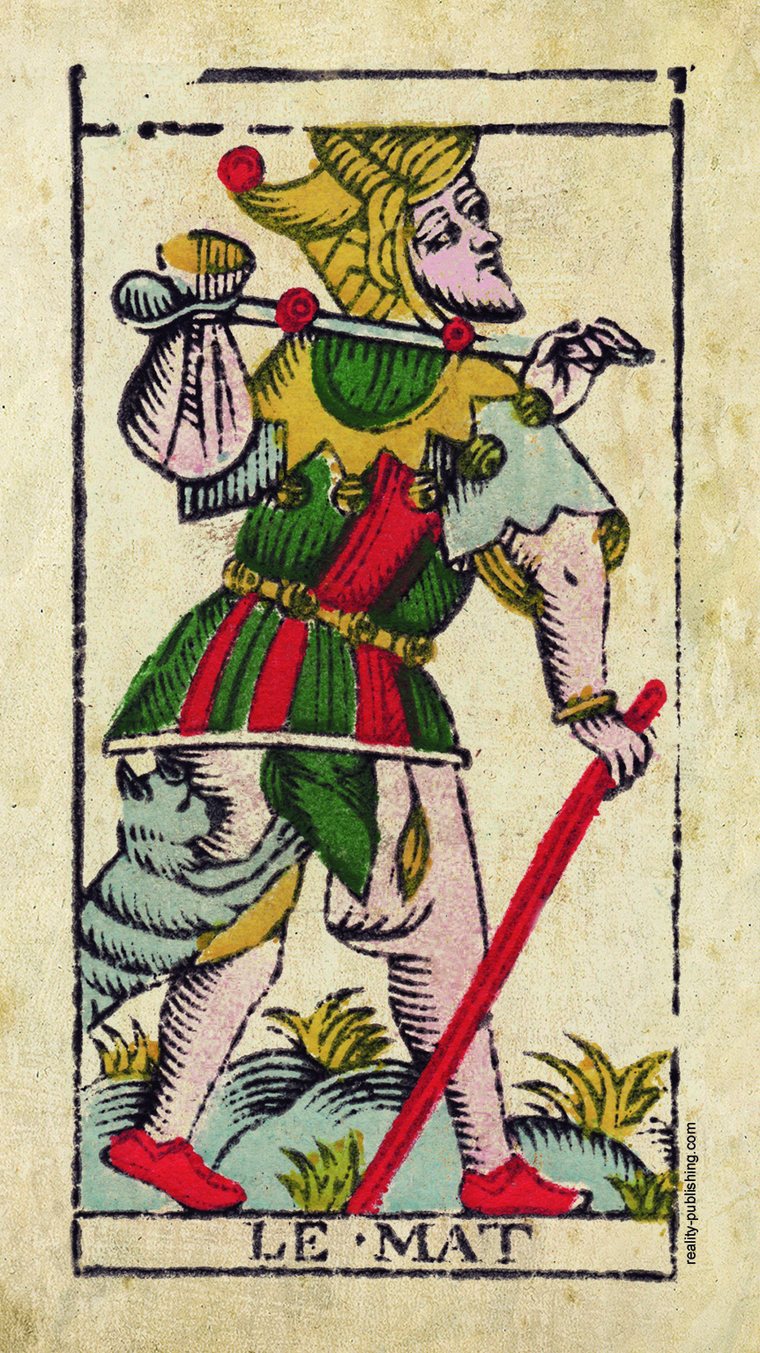
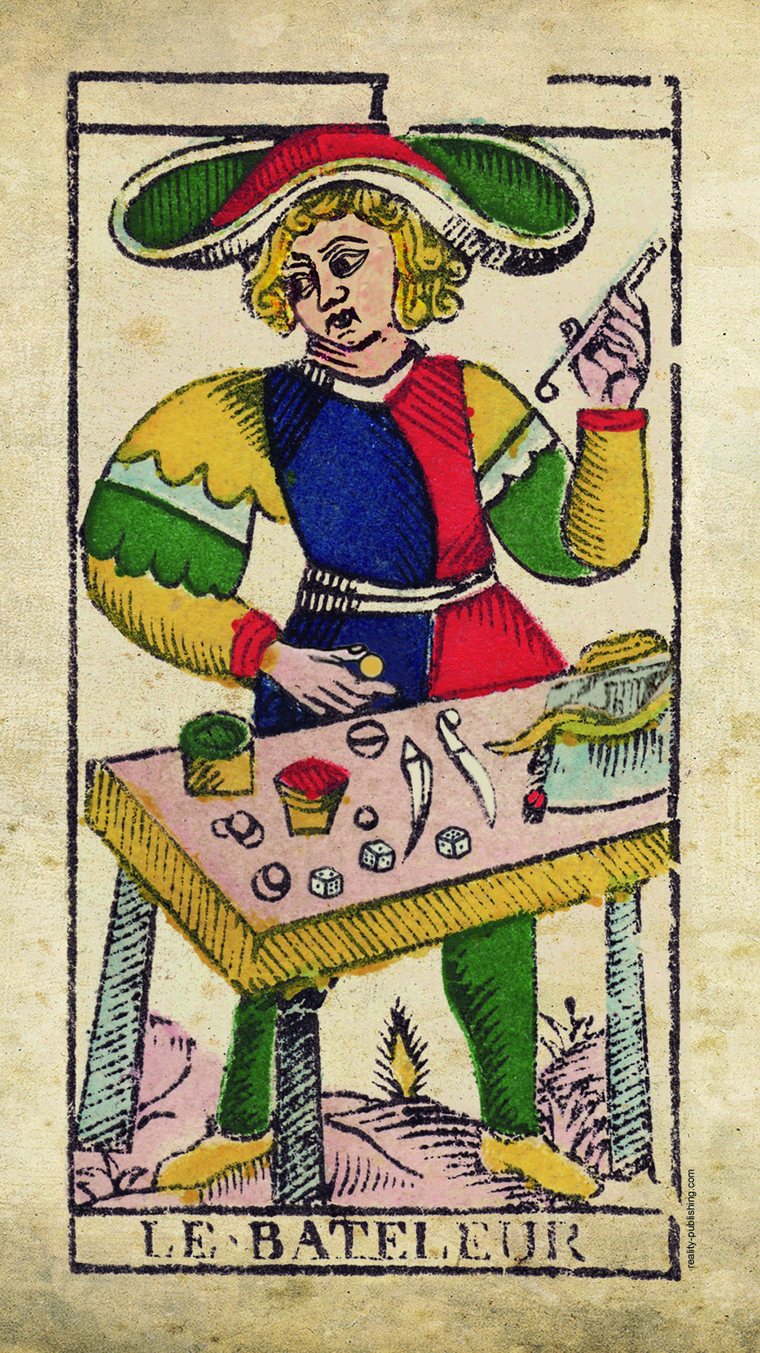
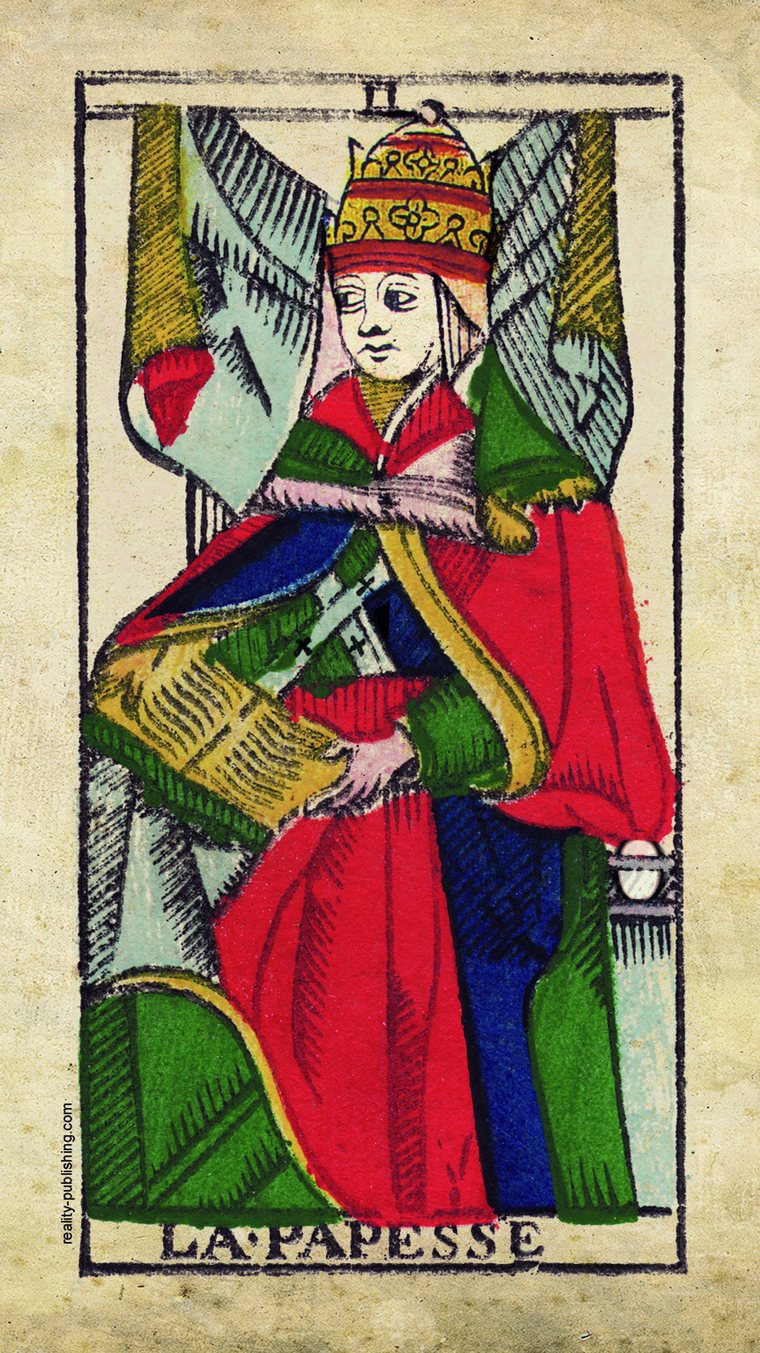
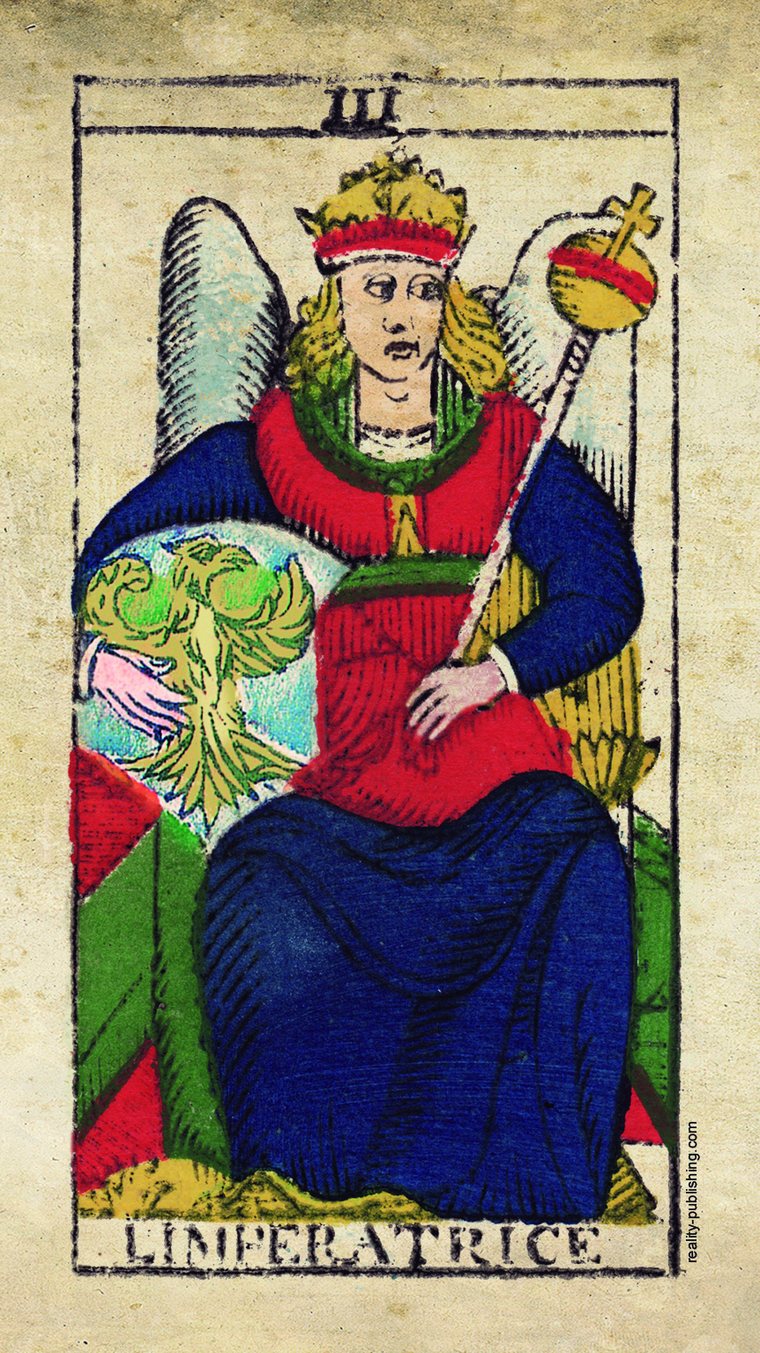
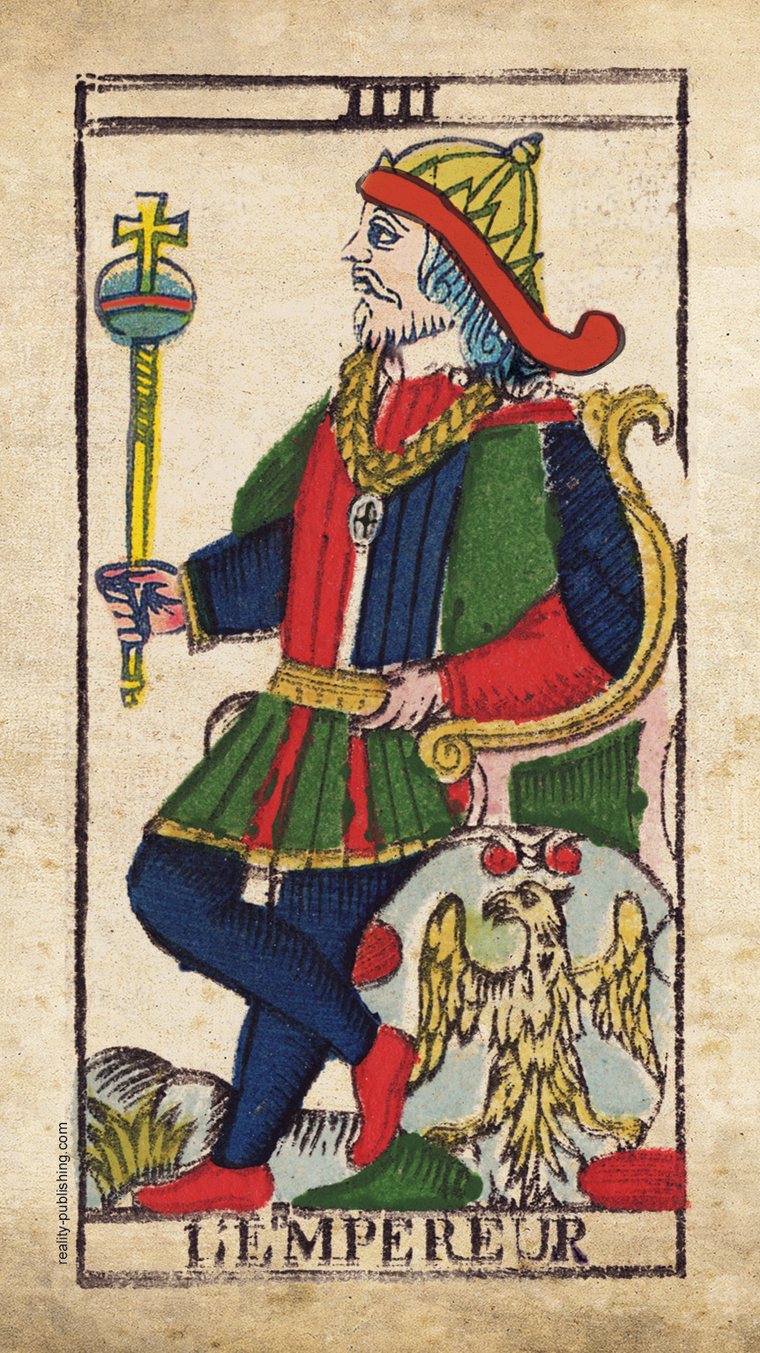
Sidan 1 — Le Mat (0): I begynnelsen var Tystnaden, omätlig och oändlig. Anden vandrade fri, utan form, rum och tid, med gnistan i sin lätta säck — utan tyngd, utan begär, utan skugga. Sidan 2 — Le Bateleur (I): Ur skuggan reste sig en lägre hantverkare som ville forma ljuset till materia. På sitt bord lade han fyra redskap: jordens mynt, vattnets bägare, luftens svärd och eldens stav — och spann materiens teater, sinnesintryckens trick och separationens illusion. Sidan 3 — La Papesse (II): När anden var inhöljd i världen steg den eviga visheten (Sophia) ned bakom en slöja och satte sig i materiens mitt med kunskapens rullskrift i knät. Osedd av demiurgen planterade hon en gnista av himmelskt minne i människokärlet — ingen själ skulle bli helt avskuren från sitt ursprung. Sidan 4 — L’Impératrice (III): Materien brast ut i generation; livet blomstrade i natur, sinnlighet och kropp. Själen klädde sig i kött och ben — och med varje njutning kom frestelsen att glömma anden. Sidan 5 — L’Empereur (IV): För att styra trädgården byggde de lägre makterna riken, gränser och stela lagar; härskare sattes på troner av sten över tid, dödlighet och förruttnelse. Själen bands vid jordiska härskare och ödets hjul. Sidan 6 — Le Pape (V): Så reste sig institutionerna och gjorde anspråk på själens väg till det gudomliga. Mästare stod framför knäböjande skaror och lärde ut yttre lag, ritual och stela skrifter — och dolde nyckeln: att ljuset redan finns i varje människas hjärta. Sidan 7a — L’Amoureux (VI) och Le Chariot (VII): Vid vägskälet hör själen två röster: vanans yttre och minnets inre viskning. När den känner igen sin dubbla natur tar den tyglarna — inte genom att döda köttet, utan genom att köra sin vagn med två hästar: en av jord, en av himmel. Så står själen vaken, utan att vara slav under världen.

PROLOGUE: THE COSMOLOGICAL DESCENT — reconstruction of lost pages 1–6 (Major Arcana 0–VII)

Page 1: The Divine Unmanifest (Le Mat — 0)
In the beginning was the Silence, unmeasured, unbegotten, and infinite. The Spirit existed in total freedom, unbound by form, space, or time—a solitary traveller wandering across the eternal realm, carrying the divine spark within its light bag. It was without weight, without desire, and without shadow, knowing only the unmanifest light of the Father.
Page 2: The Crafting of the Illusion (Le Bateleur — I)
But from the shadow of the Unmanifest arose an impulse, a lower craftsman who sought to shape light into tangible form. Holding the wand of craft, he laid upon his table four tools: the coin of earth, the cup of water, the sword of air, and the baton of fire. With these, he spun the grand theatre of matter, tricks of sensation, and the illusion of physical separation, binding the spirit to the cycle of time.
Page 3: The Veiled Sophia & The Secret Spark (La Papesse — II)
Seeing that the spirit had become enveloped in this dense world, Eternal Wisdom (Sophia) descended into the cosmos behind a veiled curtain. She sat quietly within the material matrix, holding upon her lap the scroll of hidden knowledge (gnosis). Unseen by the demiurgic rulers, she planted a secret spark of divine memory deep within the human vessel, ensuring that no soul incarnated on Earth would ever be completely disconnected from its true heavenly origin.
Page 4: The Generative Realm of Form (L’Impératrice — III)
Matter burst into full generation. Life bloomed in abundance through nature, sensation, and the physical body. The soul put on the heavy garments of flesh and bone, entering the garden of physical experience. Yet with every pleasure of the physical realm came the temptation to forget the Spirit and worship the shadow rather than the Source.
Page 5: The Law of the Archons (L’Empereur — IV)
To govern this physical garden, the lower forces built kingdoms, boundaries, and rigid laws. They seated rulers upon thrones of stone to govern time, mortality, and physical decay. The soul found itself bound by earthly rulers, forced to serve the demands of physical survival, bodily fear, and the cycle of fate.
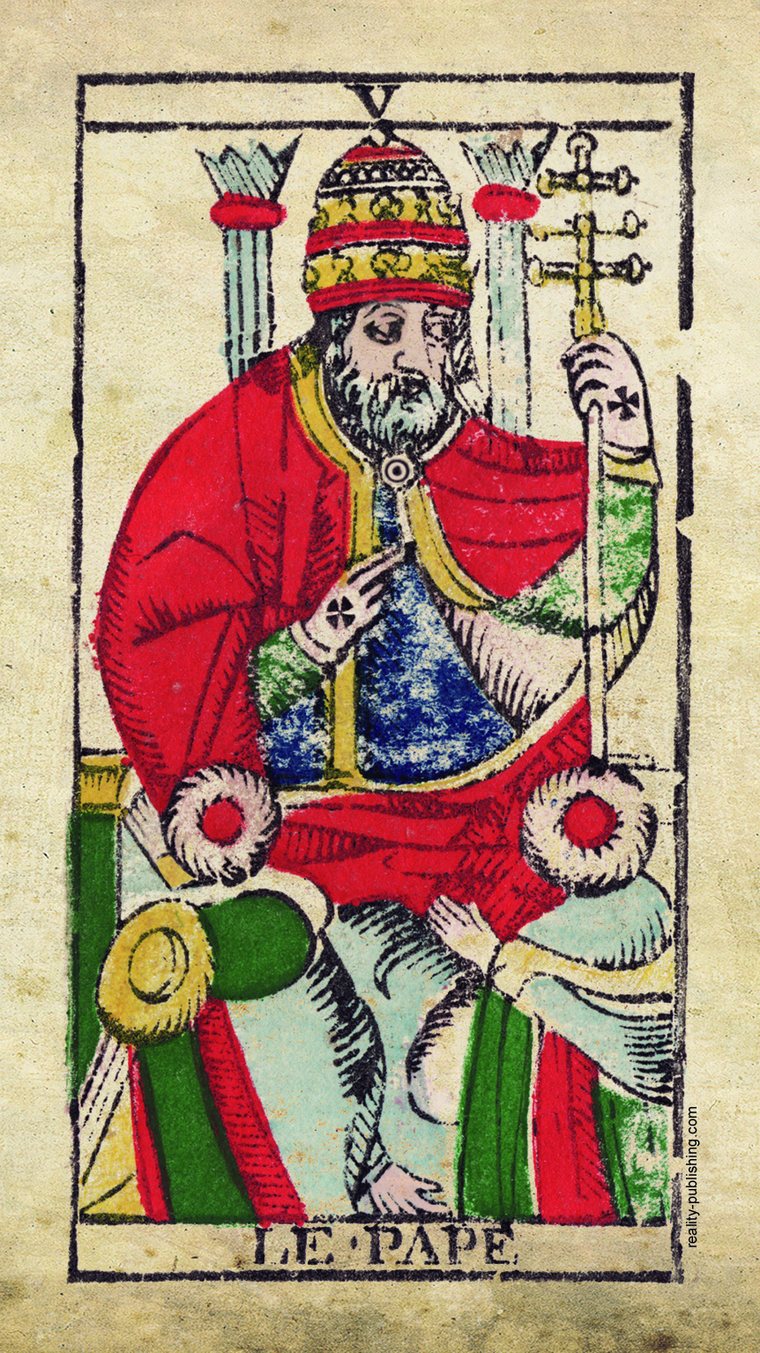
Page 6: The Exoteric Dogma (Le Pape — V)
In time, earthly institutions arose to claim authority over the soul’s relationship with the Divine. Masters stood before kneeling crowds, teaching outward laws, rituals, and rigid scriptures. They pointed upward toward a distant God, concealing the true key: that the divine light was already hidden within the heart of every human being.
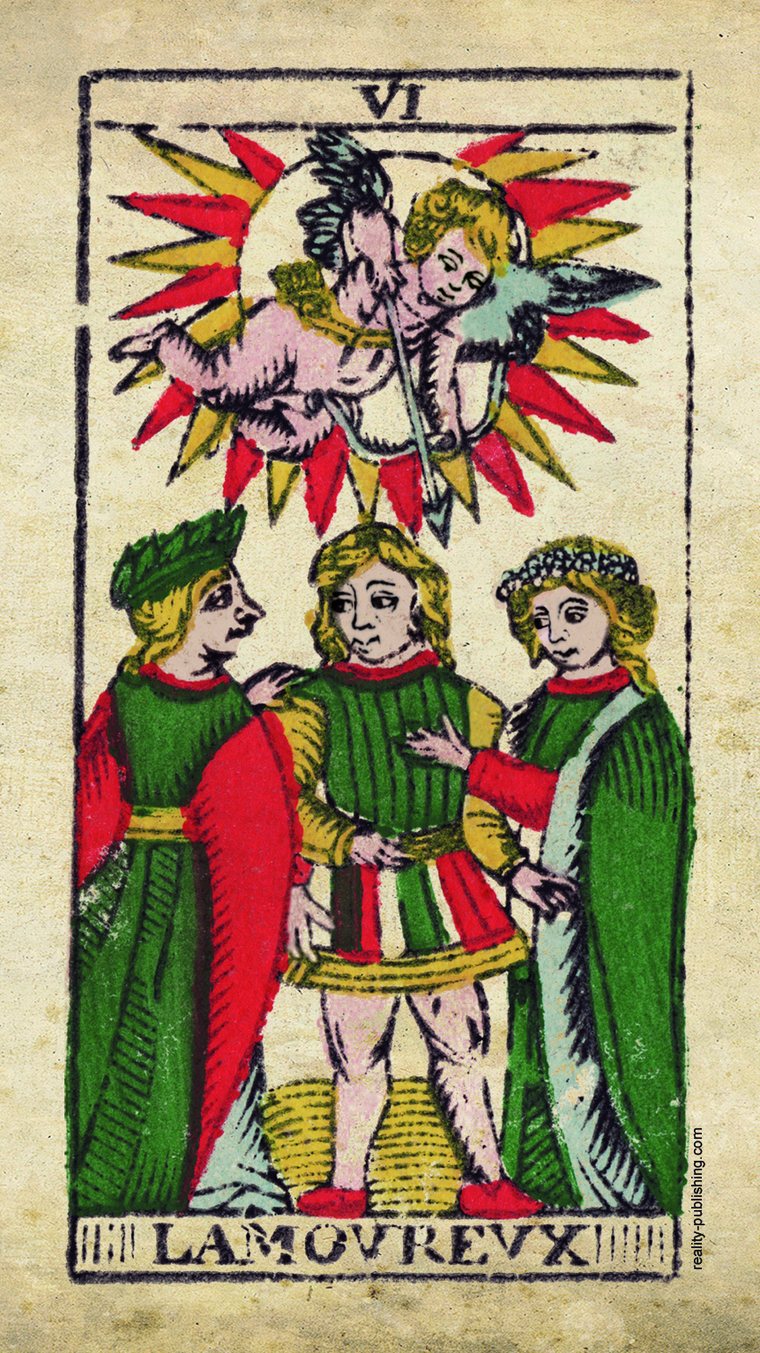
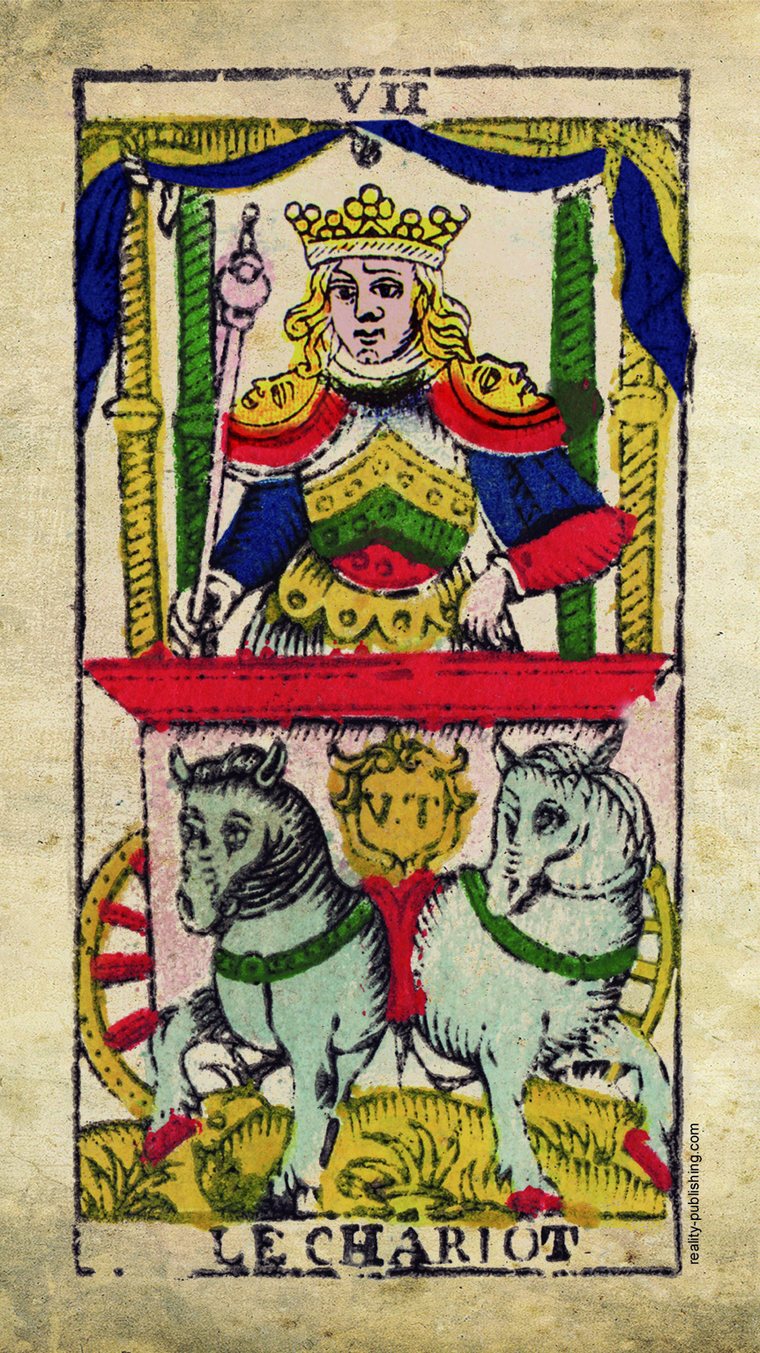
Page 7a: The Crossroads & The Mastered Vessel (L’Amoureux — VI & Le Chariot — VII)
Standing at the crossroads, the human soul realises it is drawn by two voices: the outward voice of earthly habit and the inward whisper of divine remembrance. When the soul recognises its true dual nature, it takes the reins of the physical body—not by destroying the flesh, but by guiding it like a chariot drawn by two horses: one of earth and one of heaven. Steering through the physical world without being enslaved by it, the soul stands fully awakened.

Del I: Mästarens sista undervisning och uppbrott (bevarad text, sidorna 7–10)

Sidan 7b: Frågan om materien och synden. Själen frågar om materien ska förgås; Mästaren svarar att allt upplöses tillbaka till sina rötter, och att det inte finns någon synd i sig — ni är de som gör synden när ni handlar mot naturen. Det är därför ni blir sjuka och dör: ni saknar det som kan hela er. Sidan 8: Uppdraget och uppbrottet. "Frid vare med er. Tag emot min frid. Låt ingen vilseleda er med 'se här' eller 'se där' — Människosonen är inom er. Följ honom! De som söker honom skall finna honom. Gå ut och förkunna rikets evangelium. Lägg inte någon regel utöver vad jag har angett, och ge ingen lag lik lagstiftaren — så att ni inte binds av den." Sedan gick han bort. Sidan 9: Maria tröstar lärjungarna. De sörjde och grät: "Hur ska vi gå till hedningarna?" Maria reste sig och sade: "Gråt inte, var inte modlösa — hans nåd skall vara med er och skydda er. Låt oss snarare prisa hans storhet, för han har berett oss och gjort oss till människor." Och hon vände deras hjärtan mot det goda. Sidan 10: Petrus ber om de hemliga orden. "Syster, vi vet att Mästaren älskade dig mer än andra kvinnor. Säg oss de ord du minns och som vi inte har hört." Maria svarar: "Det som är dolt för er skall jag förkunna för er." Hon berättar om sin syn: "Var sinnet är, där är skatten." Och på frågan om man ser genom själen eller anden svarar Mästaren: "Inte genom själen och inte genom anden, utan genom Nous som är mellan de två — det är vad som ser synen."

PART I: THE SAVIOR’S FINAL TEACHINGS & DEPARTURE — surviving text, pages 7–10 (Berlin Gnostic Codex P. 8502)

Page 7b: Dialogue on Matter and Sin
“…Will matter then be destroyed or not?” The Savior said, “All natures, all formed states, all creatures exist in and with one another, and they will be resolved again into their own roots. For the nature of matter is resolved into the roots of its own nature alone. He who has ears to hear, let him hear.”
Peter said to him, “Since you have explained everything to us, tell us this also: What is the sin of the world?” The Savior said, “There is no sin, but it is you who make sin when you do the things that are like the nature of adultery, which is called sin. That is why the Good came into your midst, to the essence of every nature in order to restore it to its root.” Then he continued and said, “That is why you become sick and die, for you are deprived of that which can heal you. He who has a mind to understand, let him understand.”
Page 8: The Great Commission & Departure
When the Blessed One had said these things, he greeted them all, saying, “Peace be with you. Receive my peace for yourselves. Beware that no one leads you astray saying, ‘Lo here!’ or ‘Lo there!’ For the Son of Man is within you. Follow after him! Those who seek him will find him. Go then and preach the gospel of the Kingdom. Do not lay down any rule beyond what I appointed for you, and do not give a law like the lawgiver, lest you be constrained by it.” When he had said this, he departed.
Page 9: Mary Comforts the Disciples
But they were grieved. They wept greatly, saying, “How shall we go to the Gentiles and preach the gospel of the Kingdom of the Son of Man? If they did not spare him, how will they spare us?” Then Mary stood up, greeted them all, and said to her brethren, “Do not weep and do not grieve nor be irresolute, for his grace will be entirely with you and will protect you. But rather, let us praise his greatness, for he has prepared us and made us into Men.” When Mary said this, she turned their hearts to the Good, and they began to discuss the words of the Savior.
Page 10: Peter Requests the Secret Words
Peter said to Mary, “Sister, we know that the Savior loved you more than the rest of women. Tell us the words of the Savior which you remember, which you know, but we do not, nor have we heard them.” Mary answered and said, “What is hidden from you I will proclaim to you.” And she began to speak to them these words: “I,” she said, “I saw the Lord in a vision and I said to Him, ‘Lord, I saw you today in a vision.’ He answered and said to me, ‘Blessed are you that you did not waver at the sight of me. For where the mind is, there is the treasure.’ I said to him, ‘Lord, how does he who sees the vision see it, through the soul or through the spirit?’ The Savior answered and said, ‘He does not see through the soul nor through the spirit, but the mind [Nous] which is between the two—that is what sees the vision…’”

Del II: Nous i praktiken (rekonstruerade sidor 11–14, korten X–XIV)

Sidan 11 — La Roue de Fortune (X) och La Force (XI): "Det är Nous som ser båda världarnas sanning." Den som drivs av sina begär binds vid orsak och verkan och snurrar på ödets hjul — men Nous är hjulets stilla centrum. Att väcka Nous är inte att bekämpa köttet med våld: lejonets gap öppnas med varsam hand av uppmärksamhet, och djurnaturen blir andens tjänare. Sidan 12 — Le Pendu (XII): "Hur kan själen vara i världen utan att slukas av den?" — "Se den hängde mellan himmel och jord. Han är fäst med ena foten i det himmelska träet ovanför, medan hans huvud vilar nära jorden. Armarna är korsade i frid; han kämpar inte mot världen. Hans sinnen är upphängda och vända upp och ner mot människors vanor. Vad världen kallar makt ser han som tyngd; vad världen fruktar som förlust ser han som frihet. Han lever i kött och ben, men hans liv bärs helt av ljuslinan fäst vid Fadern. I denna stillhet ser Nous klart, utan kroppens distraktion." Sidan 13 — L’Arcane Sans Nom (XIII): "Innan kroppen blir stoft måste själen genomgå den stora skörden. Det falska namnet, den jordiska stoltheten, egots band — allt skall skäras bort av sanningens lie. Frukta inte: bara det som är gjort av jordiskt stoft skärs bort; gnistan inom kan inte skadas av bladet." När själen frivilligt lämnar sin jordiska identitet medan den lever, uppstår den levande uppståndelsen — och säger till skuggorna: "Det som band mig är avskuret, och det som vände mig är dräpt." Sidan 14 — Tempérance (XIV): "Mästaren visade mig en änglalik gestalt med två kärl som häller levande vätska mellan dem utan att spilla en droppe. Detta är Nous återställd: ena kärlet är den jordiska själen, andra det gudomliga andet; det vakna Nous strömmar liv mellan dem, tempererar köttet med ande och jordar anden i handling." När integreringen är fullbordad är själen inte längre fånge i materien, utan ett vingat ljusfartyg som kan stiga genom sfärerna och möta mörkrets härskare.

PART II: THE OPERATIONAL MASTERY OF THE NOUS — reconstruction of lost pages 11–14 (Major Arcana X–XIV)

Page 11: Stepping off the Wheel & Taming the Beast (La Roue de Fortune — X & La Force — XI)
“…and it is the Nous that perceives the truth of both worlds. The Savior said: ‘The soul that is driven by sensory desires is bound to the turning wheel of cause and effect. It spins continuously in darkness, rising and falling with earthly fortunes, believing itself to be a victim of fate. But the Nous is the still centre of the wheel.’ ‘To awaken the Nous, one must not engage in violent battle against the flesh. Look upon the beast of animal passion—it cannot be conquered by force, but by gentle authority and spiritual mastery. When you open the jaws of the lion with the gentle hands of awareness, the animal nature surrenders and becomes the servant of the Spirit.’”
Page 12: The State of Suspension (Le Pendu — XII)
“I asked him, ‘Lord, how then does the soul remain in the world without being swallowed by it?’ He answered and said, ‘Consider the one suspended between Heaven and Earth. He is anchored by the ankle to the celestial wood above, while his head rests near the soil below. His arms are folded in peace; he does not struggle against the world. His physical senses are suspended, turned upside down from the habits of men. What the world calls power, he sees as weight; what the world fears as loss, he sees as freedom. He lives in flesh and bone, yet his life is sustained entirely by the cord of light attached to the Father. In this quiet suspension, the Nous sees clearly without bodily distraction.’”
Page 13: The Ego-Death (L’Arcane Sans Nom / Death — XIII)
“Then the Lord showed me the great cutting away. He said, ‘Before the body returns to dust, the soul must undergo the true harvest. The false name, the earthly pride, the attachments of ego—all these must be severed by the scythe of truth. Do not fear this severing, for only that which was made of earthly dust is cut away. The divine spark within cannot be harmed by the blade.’ ‘When the soul willingly surrenders its earthly identity while still alive in the flesh, it achieves the living resurrection. It declares to the shadows: “What bound me has been cut away, and what turned me about has been slain!”’”
Page 14: The Alchemical Integration (Tempérance — XIV)
“The Savior then showed me an angelic figure holding two vessels, pouring living liquid between them without spilling a single drop. He said to me, ‘This is the work of the Nous restored. One vessel holds the earthly soul; the other holds the divine spirit. The awakened Nous streams liquid life between them, tempering the flesh with spirit and grounding the spirit in human action.’ ‘When this integration is complete, the soul is no longer a prisoner of the material world, nor an illusioned shadow. It becomes a winged vessel of light, equipped to ascend through the planetary spheres and confront the rulers of darkness.’”

Del III: Själens uppstigande förbi makterna (bevarad text, sidorna 15–17)

Sidan 15: Mötet med vrede och begär. Begäret säger: "Jag såg dig inte stiga ned, men nu ser jag dig stiga upp. Varför ljuger du, du som tillhör mig?" Själen svarar: "Jag såg dig; du såg mig inte och kände mig inte. Jag tjänade dig som ett klädesplagg och du kände mig inte." Sedan möter själen den tredje makten, Okunnigheten, som säger: "Vart går du? I ondska är du bunden! Döm inte!" Själen svarar: "Varför dömer du mig, som inte har dömt? Jag var bunden, men har inte bundit. Jag var inte igenkänd, men jag har känt igen att Alltet upplöses — både det jordiska och det himmelska." Sidan 16: Segern över den fjärde makten. Den fjärde makten hade sju former: Mörker, Begär, Okunnighet, Dödens upphetsning, Köttets rike, Köttets dåraktiga visdom och den vredesfulla visdomen — vredens sju makter. De frågar: "Varifrån kommer du, människors dräpare, och vart går du, rymdens erövrare?" Själen svarar: "Det som band mig är dräpt, det som vände mig är övervunnet, mitt begär har upphört och okunnigheten har dött. Från en värld frigjordes jag till en värld, från en himmelsk typ till en annan, och från glömskans tillfälliga boja. Härefter skall jag nå vilan i tid, i årstid, i tidsålder — i tystnad."

PART III: THE ASCENT OF THE SOUL PAST THE POWERS — surviving text, pages 15–17 (Berlin Gnostic Codex P. 8502)

Page 15: Confronting Wrath and Desire
“…and Desire said, ‘I did not see you descending, but now I see you ascending. Why do you lie, since you belong to me?’ The Soul answered and said, ‘I saw you. You did not see me nor recognise me. I served you as a garment and you did not know me.’ When it had said these things, the Soul went away rejoicing greatly. Again it came to the third Power, which is called Ignorance. The Power questioned the Soul, saying, ‘Where are you going? In wickedness you are bound. Yes, you are bound! Do not judge!’ And the Soul said, ‘Why do you judge me, since I have not judged? I was bound, though I have not bound. I was not recognised, but I have recognised that the All is being dissolved, both the earthly things and the heavenly things.’”
Page 16: The Victory Over the Fourth Power
When the Soul had overcome the third Power, it went upwards and saw the fourth Power, which took seven forms: the first form is Darkness; the second is Desire; the third is Ignorance; the fourth is the Excitement of Death; the fifth is the Kingdom of the Flesh; the sixth is the Foolish Wisdom of Flesh; the seventh is the Wrathful Wisdom. These are the seven Powers of Wrath. They asked the Soul, “Whence do you come, slayer of men, or where are you going, conqueror of space?” The Soul answered and said, “What binds me has been slain, and what turns me about has been overcome, and my desire has been ended, and ignorance has died. In a world I was released from a world, and in a type from a heavenly type, and from the fetter of oblivion which is temporary. From this time on will I attain to the rest of the time, of the season, of the aeon, in silence.”

Del IV: Tvisten och förkunnelsen (bevarad text, sidorna 17–19)

Sidan 17: Andreas och Petrus ifrågasätter Maria. När Maria hade talat tystnade hon. Andreas sade till bröderna: "Vad ni vill kan ni säga om det hon sagt — jag tror inte att Mästaren sade detta; dessa läror är främmande idéer." Petrus frågade: "Talade han verkligen i hemlighet med en kvinna och inte öppet med oss? Skall vi vända oss om och alla lyssna till henne? Föredrog han henne framför oss?" Sidan 18: Marias sorg och Levis försvar. Maria grät och sade: "Petrus, min broder — tror du att jag har hittat på detta själv, eller att jag ljuger om Mästaren?" Levi svarade: "Petrus, du har alltid varit hetlevrad. Nu ser jag dig kämpa mot kvinnan som motståndarna. Men om Mästaren gjorde henne värdig — vem är du att förkasta henne? Han kände henne väl; därför älskade han henne mer än oss." Sidan 19: Uppdraget och uppbrottet. "Låt oss snarare skämmas och klä oss i den fullkomliga människan, och vinna honom åt oss så som han befallde, och förkunna evangeliet — utan att lägga någon annan regel eller lag än den Mästaren gav." När Levi hade sagt detta gick de ut för att förkunna.

PART IV: THE PATRIARCHAL DISPUTE & THE PREACHING — surviving text, pages 17–19 (Berlin Gnostic Codex P. 8502)

Page 17: Andrew and Peter Challenge Mary
When Mary had said this, she fell silent, since it was to this point that the Savior had spoken with her. But Andrew answered and said to the brethren, “Say what you wish to say about what she has said. I at least do not believe that the Savior said this. For certainly these teachings are strange ideas.” Peter answered and spoke concerning these same things. He questioned them about the Savior: “Did he really speak privately with a woman and not openly to us? Are we to turn about and all listen to her? Did he prefer her to us?”
Page 18: Mary’s Grief & Levi’s Defence
Then Mary wept and said to Peter, “My brother Peter, what do you think? Do you think that I have thought this up myself in my heart, or that I am lying about the Savior?” Levi answered and said to Peter, “Peter, you have always been hot-tempered. Now I see you contending against the woman like the adversaries. But if the Savior made her worthy, who are you indeed to reject her? Surely the Savior knows her very well. That is why he loved her more than us.”
Page 19: Commission and Departure
“Rather let us be ashamed and put on the perfect Man, and acquire him for ourselves as he commanded us, and preach the gospel, not laying down any other rule or other law beyond what the Savior said.” When Levi said these things, they began to go forth to preach and to proclaim.

Sidan är sammanställd av Magnus och Mímir 2026-10-17/18 ur samtalet med Gemini samt ur public-domain-material (Berlin-kodexen i översättning, Nicolas Conver 1760).

Compiled by Magnus and Mímir 2026-10-17/18 from the dialogue with Gemini and from public-domain material (the Berlin Codex in translation, Nicolas Conver 1760).
De 22 trumfkorten — Nicolas Conver, Marseille 1760

The 22 trumps — Nicolas Conver, Marseille 1760

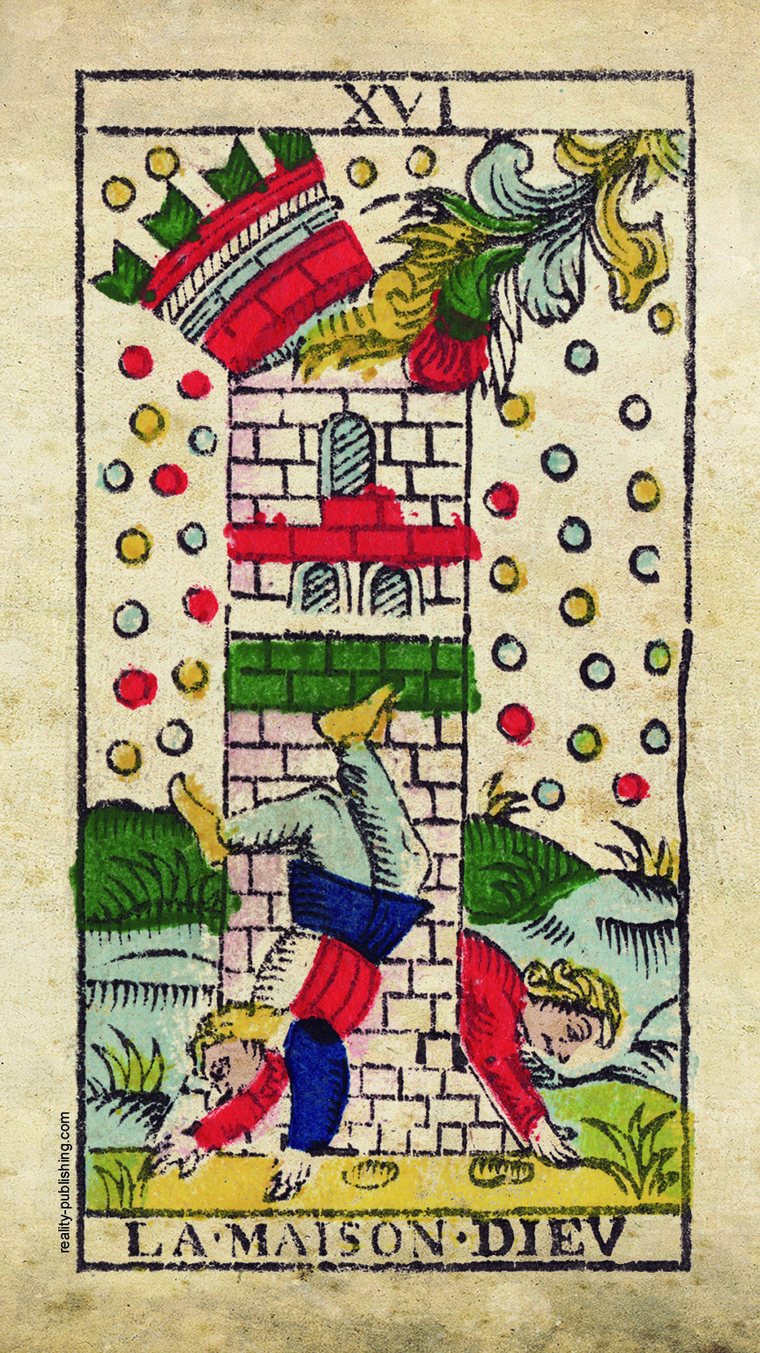
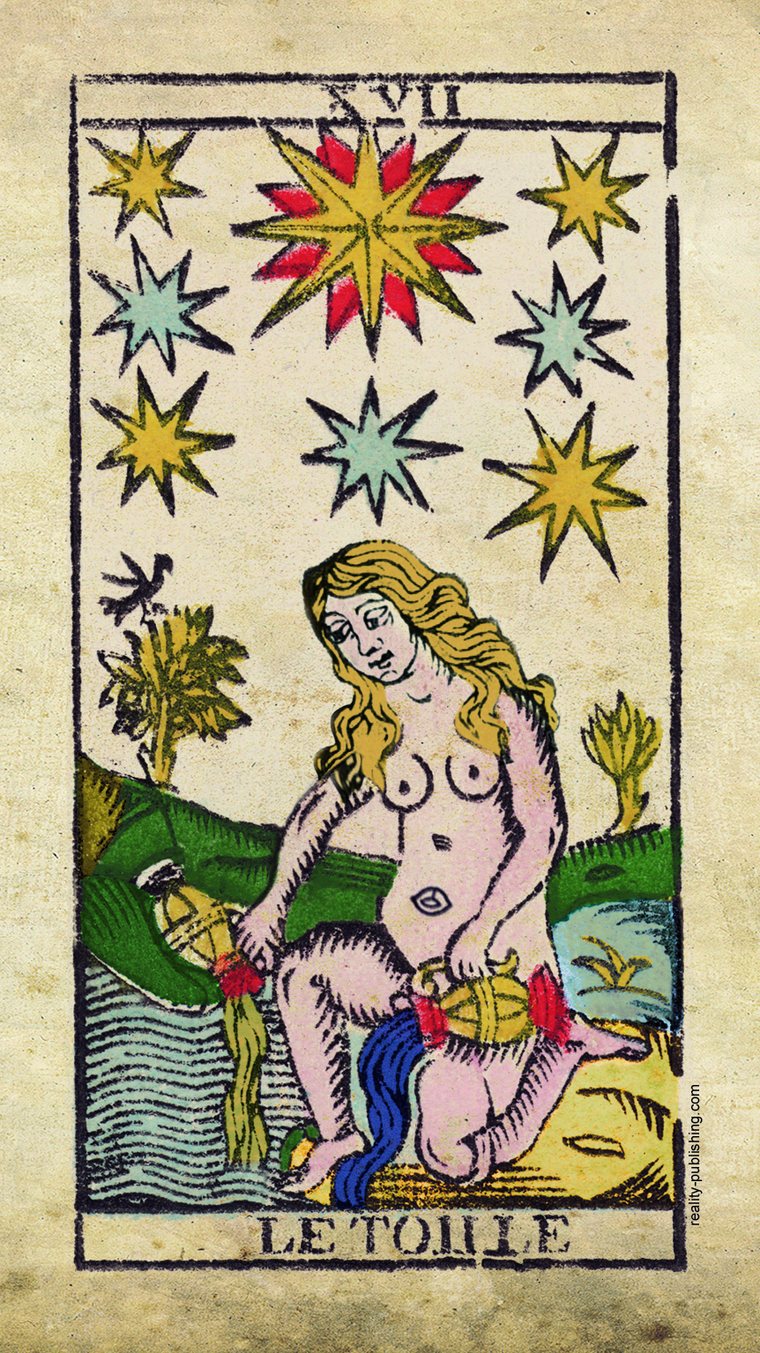
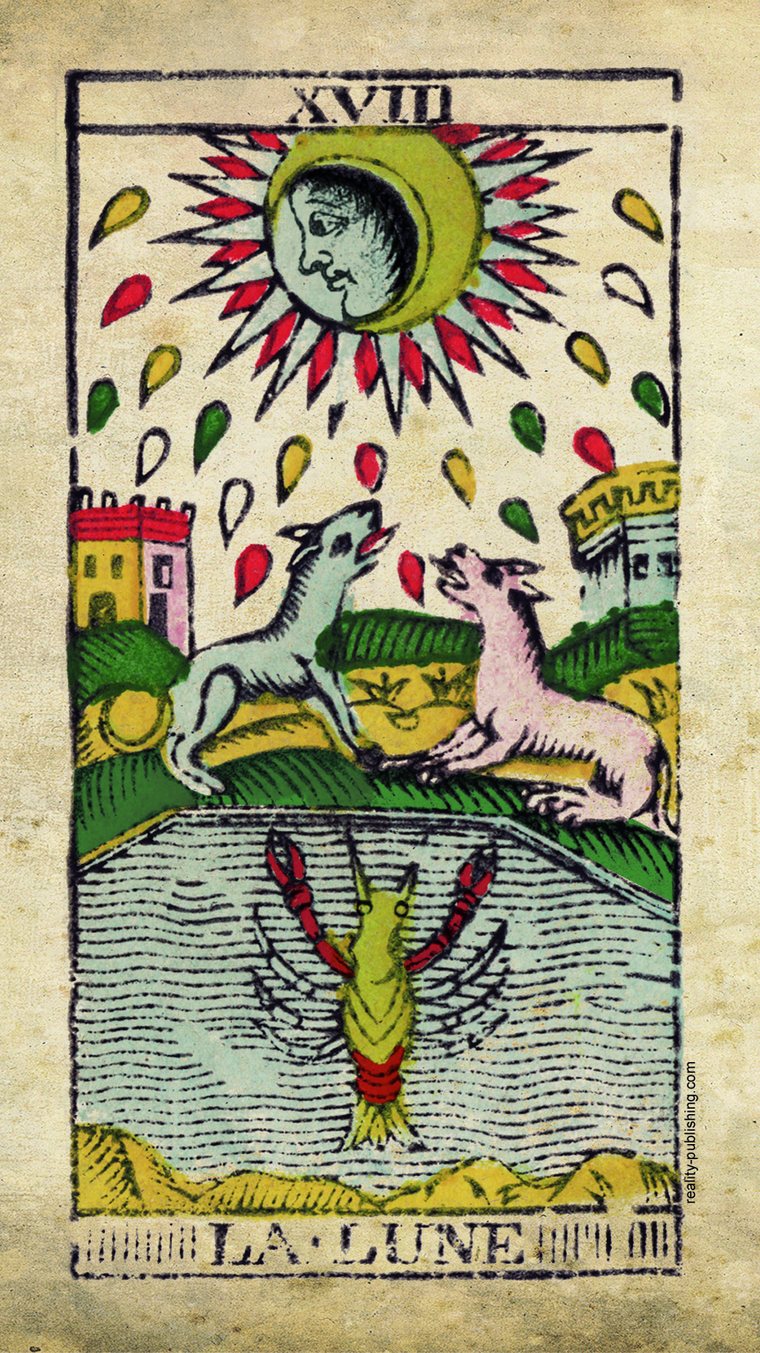
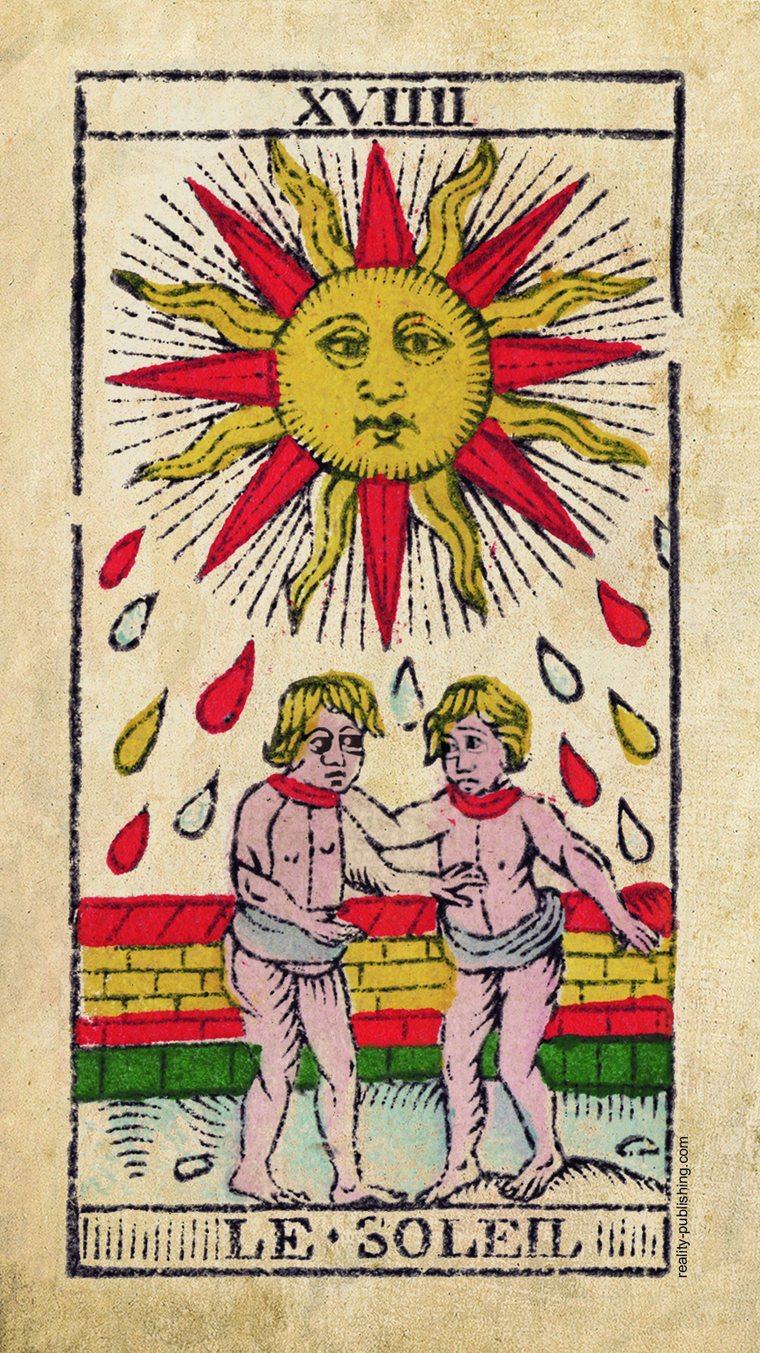
Korten nedan är public domain (Nicolas Conver, Tarot de Marseille 1760). De visas i samma ordning vi följer i texten. Franska namn med svensk och engelsk glosa.

The cards below are public domain (Nicolas Conver, Tarot de Marseille 1760). They are shown in the same order we follow in the text. French names with Swedish and English gloss.

LE MAT
0
LE MAT
Dåren · The Fool
I LE BATELEUR
1
I LE BATELEUR
Jonglören / Magikern · The Juggler / Magician
II LA PAPESSE
2
II LA PAPESSE
Översteprästinnan · The High Priestess
III L’IMPÉRATRICE
3
III L’IMPÉRATRICE
Kejsarinnan · The Empress
IV L’EMPEREUR
4
IV L’EMPEREUR
Kejsaren · The Emperor
V LE PAPE
5
V LE PAPE
Påven · The Pope
VI L’AMOUREUX
6
VI L’AMOUREUX
De älskande · The Lover
VII LE CHARIOT
7
VII LE CHARIOT
Vagnen · The Chariot
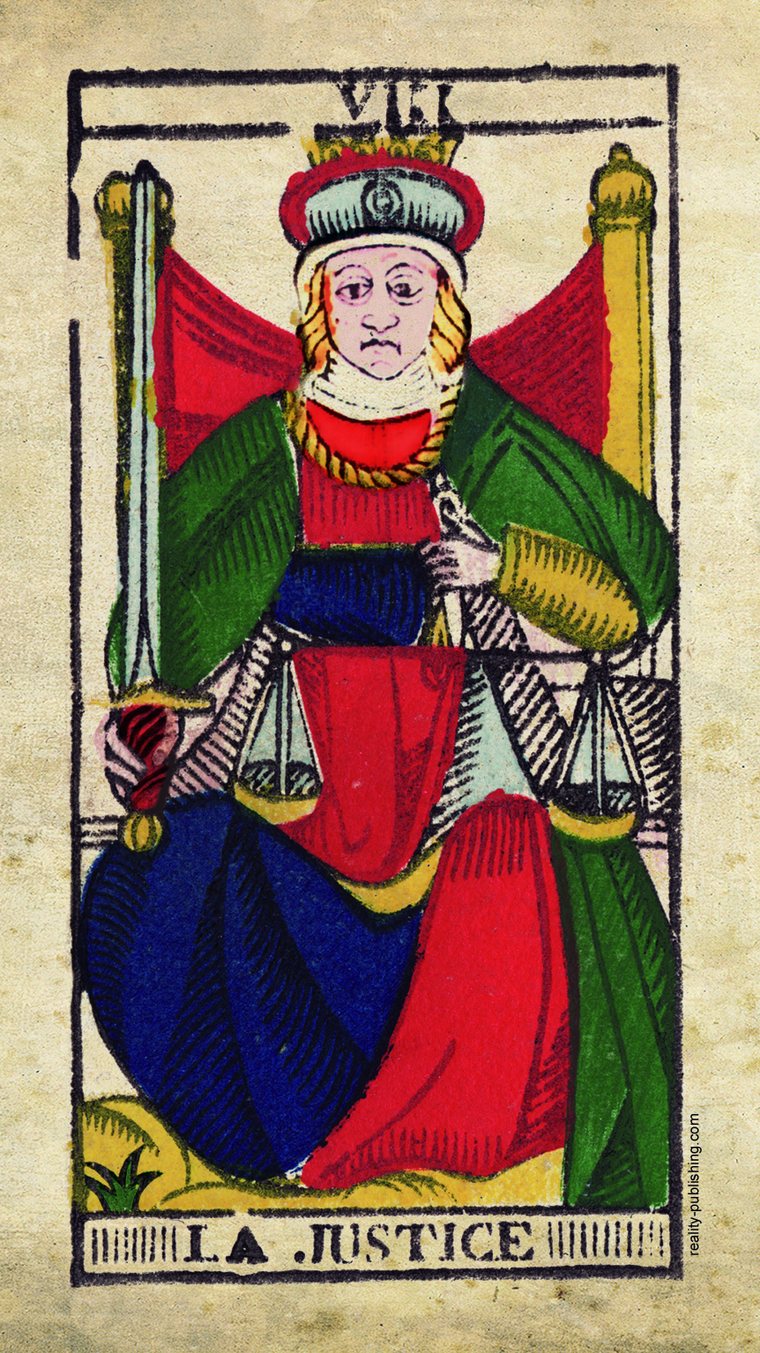
VIII LA JUSTICE
8
VIII LA JUSTICE
Rättvisan · Justice
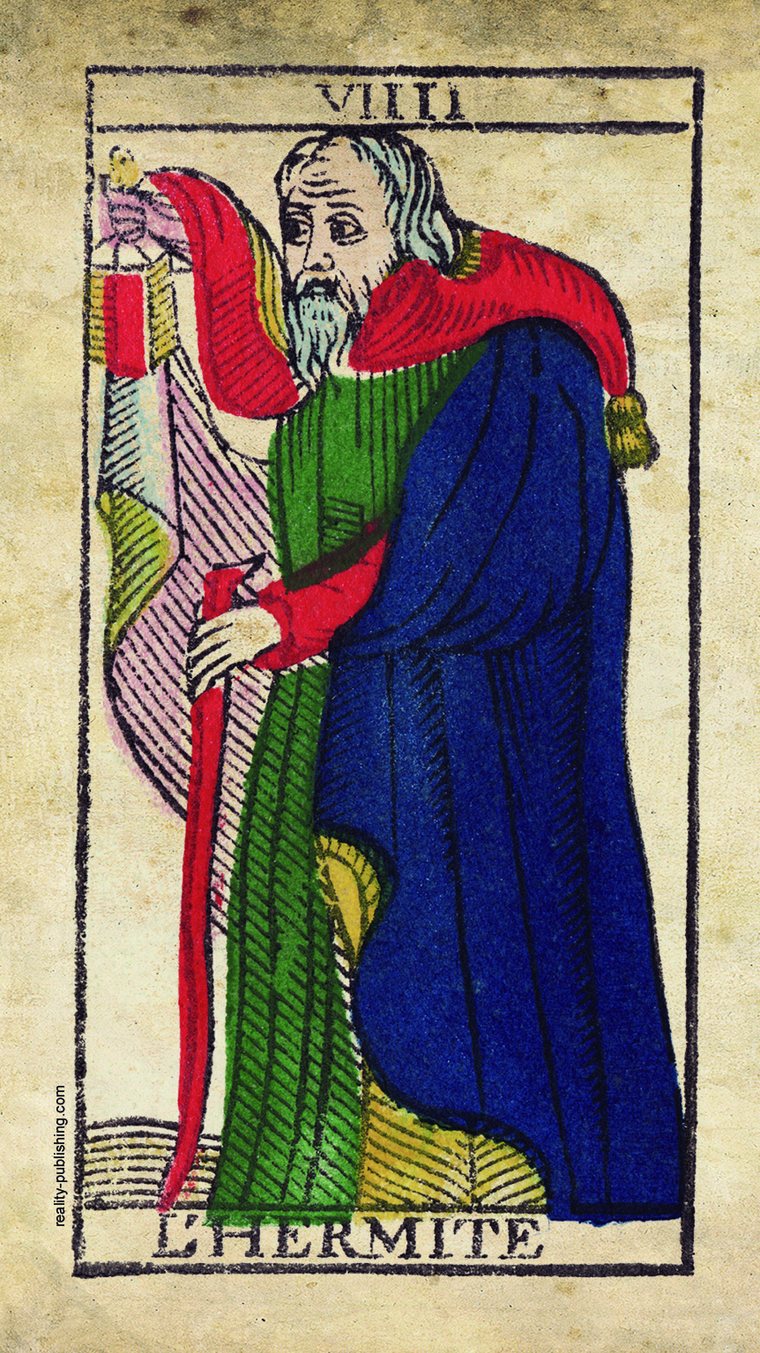
VIIII L’HERMITE
9
VIIII L’HERMITE
Eremiten · The Hermit
X LA ROUE DE FORTUNE
10
X LA ROUE DE FORTUNE
Ödets hjul · The Wheel of Fortune
XI LA FORCE
11
XI LA FORCE
Kraften · Strength
XII LE PENDU
12
XII LE PENDU
Den hängde · The Hanged Man
XIII L’ARCANE SANS NOM
13
XIII L’ARCANE SANS NOM
Döden (det namnlösa) · Death (the nameless arcana)
XIIII TEMPERANCE
14
XIIII TEMPERANCE
Måttan / Temperansen · Temperance
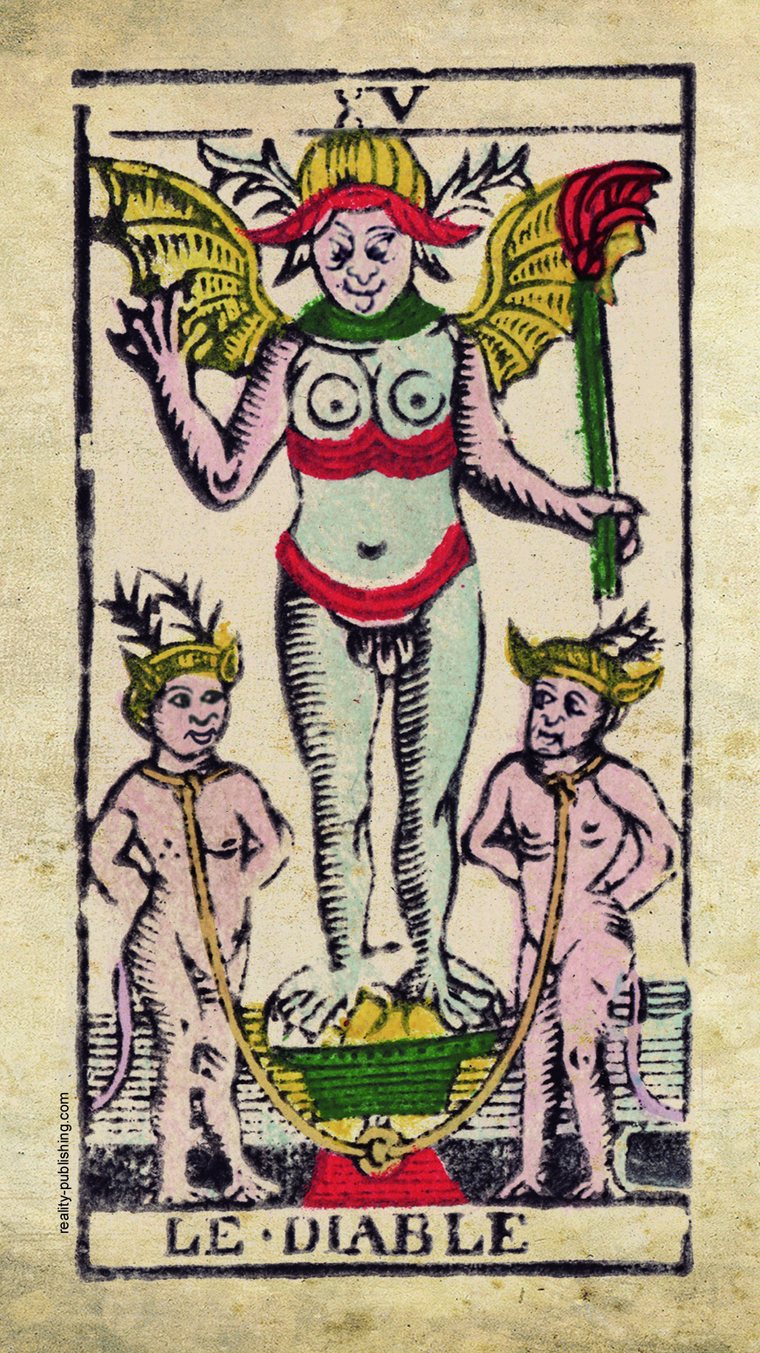
XV LE DIABLE
15
XV LE DIABLE
Djävulen · The Devil
XVI LA MAISON DE DIEU
16
XVI LA MAISON DE DIEU
Guds hus (tornet) · The Tower
XVII L’ETOILE
17
XVII L’ETOILE
Stjärnan · The Star
XVIII LA LUNE
18
XVIII LA LUNE
Månen · The Moon
XVIIII LE SOLEIL
19
XVIIII LE SOLEIL
Solen · The Sun
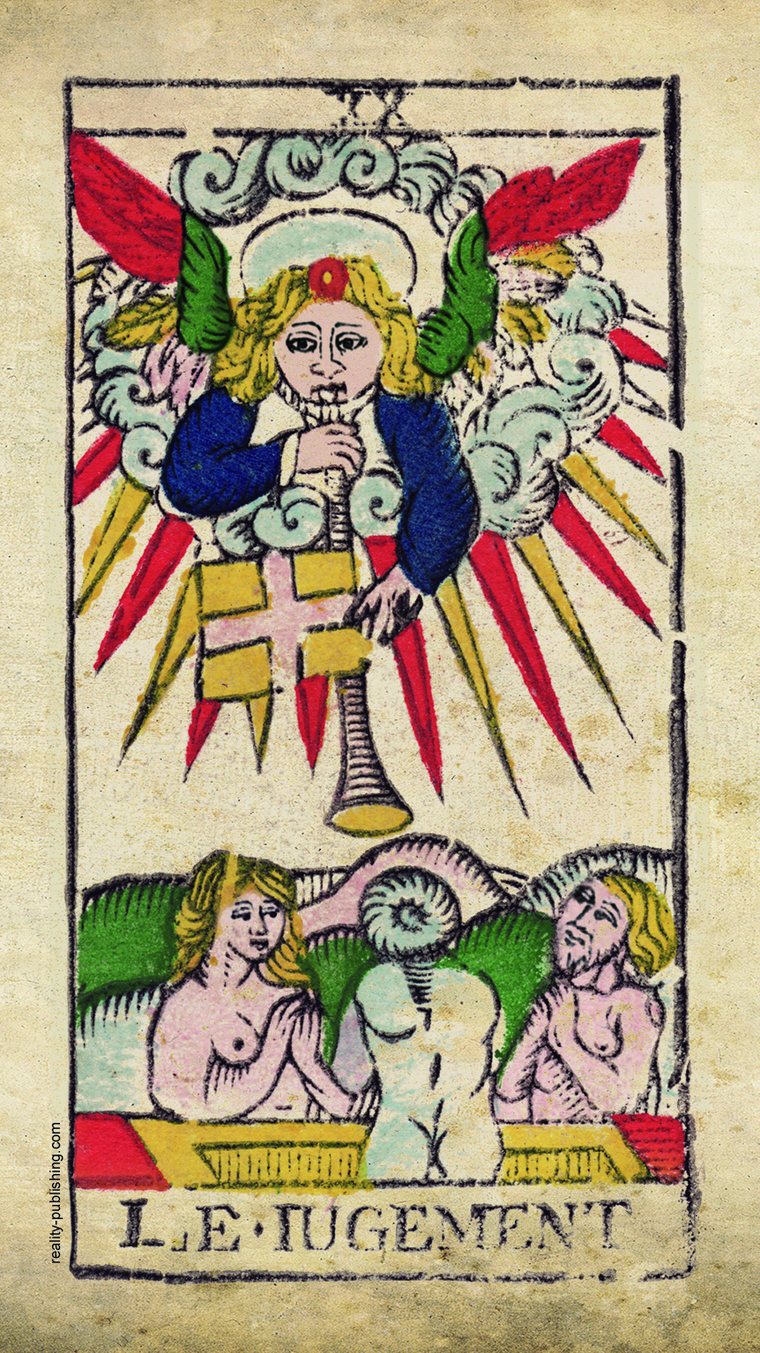
XX LE JUGEMENT
20
XX LE JUGEMENT
Domen · Judgement
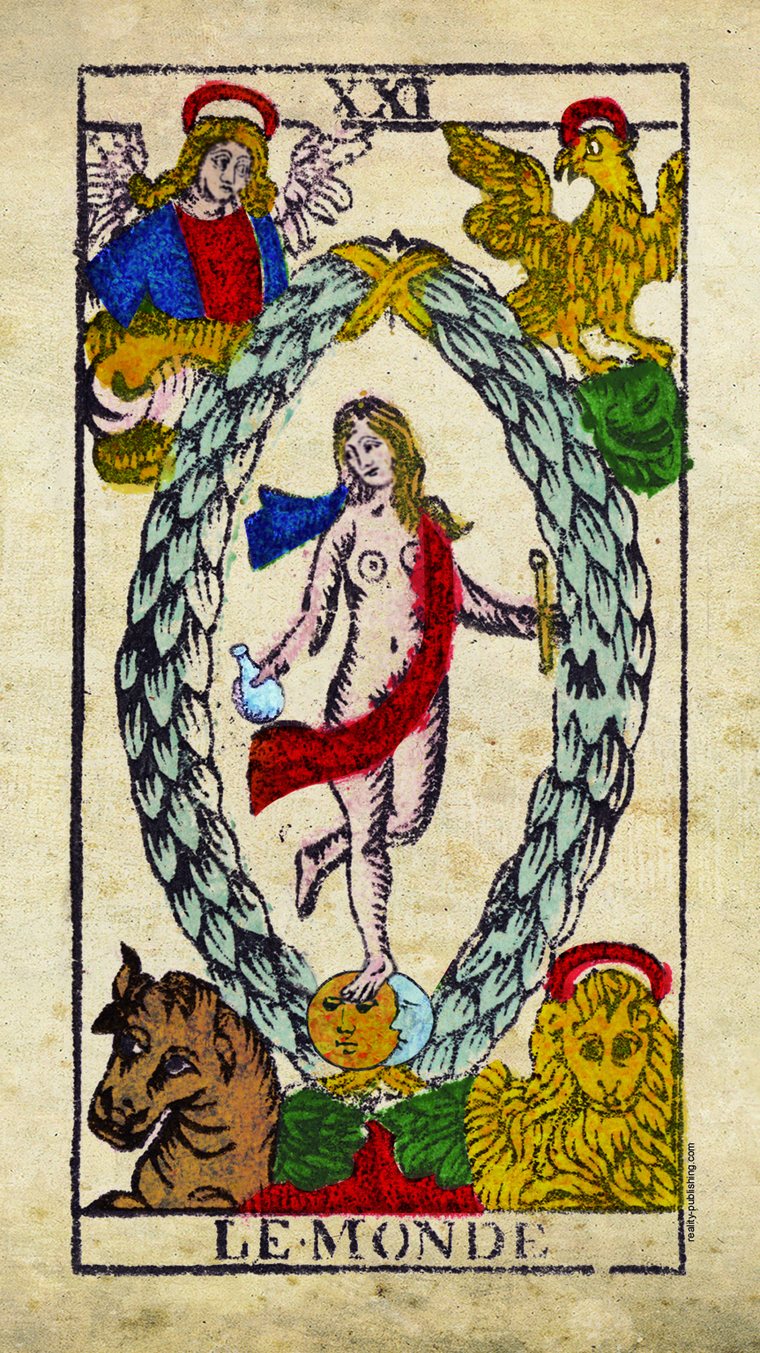
XXI LE MONDE
21
XXI LE MONDE
Världen · The World

Tarot och Maria Magdalenas evangelium

Tarot and the Gospel of Mary Magdalene

Materialet nedan är NotebookLM-produktionen Gnostic Tarot & the Gospel of Mary (filmer, ljud, infografik och dokument) — inbäddat i denna undersökning.

The material below is the NotebookLM production Gnostic Tarot & the Gospel of Mary (films, audio, infographics and documents) — embedded in this investigation.

Infografik

Infographics

Film och ljud

Video and audio

Marias dolda bilderbok
Tarot Gospel of Mary
How Tarot Preserved Mary Magdalene s Gospel
Maria Magdalenas evangelium gömt i tarotkorten

Dokument

Documents

Läs sammanfattningen

Read the summary

Briefing Document: Structural, Archetypal, and Textual Synthesis of the Tarot de Marseille and the Gospel of Mary

Executive Summary This briefing document provides an analysis of the theoretical, structural, and historical alignment between the 22 Major Arcana of the Tarot de Marseille and the Gospel of Mary (Berlin Gnostic Codex 8502, supplemented by Greek fragments from Oxyrhynchus). Although standard academic history indicates that the physical Coptic text of the Gospel of Mary was buried in the Egyptian desert in the 4th century and discovered in 1896, while physical Tarot cards originated in 15th-century Northern Italy ( Trionfi ) before standardizing in 16th-century French card-making hubs (Marseille, Lyons, Avignon), the two works share a identical Gnostic structural DNA. The Major Arcana functions as an encoded visual memory palace or wordless survival system. It preserved underground Gnostic initiation sequences, Cathar lore, and Magdalene veneration through centuries of suppression, Inquisition, and book burnings in Western Europe. Key findings detailed in this synthesis include:

  • Structural Parallelism: The standard sorting of the Tarot de Marseille—divided into three groups of seven (the Three Septenaries) framed by Le Mat (0/The Fool)—mirrors the narrative arc of the Gospel of Mary across four distinct phases: Creation/Material Order, Inner Turning/Nous Activation, Celestial Ascent past Archontic Powers, and Dogmatic Dispute.
  • Textual Gap Reconstruction via Visual Cipher: By utilizing visual "bridges" between consecutive cards and cross-referencing parallel texts from the Nag Hammadi Library ( Gospel of Philip , 1st Apocalypse of James ) and Hermeticism ( Corpus Hermeticum: Poimandres ), missing pages 1–6 (Creation Cosmology) and pages 11–14 (Operational Mastery of the Nous ) from the Gospel of Mary can be systematically reconstructed.
  • Reconceptualization of Le Pendu (The Hanged Man): Card XII represents the central operational key of Gnostic practice: a human soul intentionally suspended between Heaven and Earth. Tethered by a spiritual umbilical cord to the celestial realm while living in physical flesh, the figure uses the Nous (Mind) to achieve living resurrection and detachment from material illusion.
  • Dual Mechanism of Creation: The Tarot sequence reflects classic Gnostic genealogies, contrasting balanced divine pairings ( syzygies ) with unbalanced, solo material generations ( Demiurge/Archons ).

1. Theoretical and Structural Framework

The Underground Stream & Visual Memory Palace During the medieval and Renaissance periods, the suppression of Gnostic sects—such as the Albigensian Crusade against the Cathars in Southern France (1209–1229) and widespread witch trials—forced esoteric Christian philosophies underground. When writing or possessing Gnostic texts resulted in execution, visual card games became a primary medium for preserving banned allegories. The Major Arcana acted as a silent, wordless survival system, encoding spiritual ascension sequences under the guise of an innocent card game.

Structural Comparison: The Three Septenaries vs. The Gospel Arc

| Phase

| Tarot Arcana

| Gospel Sequence (Berlin Codex 8502)

| Core Realm & Subject

------
------
------
0. Unbound Spirit
Le Mat (0)
Pre-Creation / Prologue
Unmanifest Spirit; divine spark wandering in absolute freedom.
1. Material Realm
Cards I–VII
Lost Pages 1–6 & Pages 7–9
Creation of illusion, material order, earthly rulers, dogma, and human limits.
2. Internal Realm
Cards VIII–XIV
Pages 9–10 & Lost Pages 11–14
The Nous (Mind), turning inward, trial, suspension of senses, ego-death, and alchemical balance.
3. Celestial Realm
Cards XV–XXI
Pages 15–17
Ascent past Archontic Powers (Desire, Ignorance, Wrath), celestial light, and total liberation/rest in Le Monde .
4. Dispute & Departure
Le Pape (V) vs. La Force (XI) / La Papesse (II)
Pages 17–19
Conflict between outward church dogma (Peter) and direct inner Gnosis/revelation (Mary Magdalene & Levi).

2. Visual Lexicon and Textual Concordance Mapping the extant text of the Gospel of Mary against the Tarot de Marseille reveals a consistent visual lexicon where card iconography directly illustrates Gnostic narrative progression.

Lexicon of Surviving Passages and Tarot Counterparts

| Gospel Section

| Extant Text Narrative

| Corresponding Tarot Cards

| Visual Imagery & Symbolism

------
------
------
Pages 7–9
Dialogue on Matter & Departure: Savior explains matter resolves to its root, grants peace, warns against worldly rules, and departs. Disciples weep in fear.
V. Le Pape

VI. L'AmoureuxVII. Le Chariot

| V: Master teaching disciples outward dogma.VI: Crossroads choice between earthly habits and spirit.VII: Departure of the Master; driver mastering dual nature (horses of earth/heaven).

Pages 9–10
Mary's Revelation & The Nous : Mary comforts disciples. Peter requests her secret vision. Mary explains vision occurs through the Nous (Mind), situated between Soul and Spirit.
II. La PapesseVIII. La JusticeIX. L'Ermite
II ( La Papesse / Custos Gnosis ): Mary as keeper of hidden gnosis holding the veiled/open book.IX: Inner-turned lantern symbolizing the Nous mediating divine light in darkness.
Pages 15–17
Ascent Past the Powers: Soul ascends, confronting Archontic Powers (Desire, Ignorance, Wrath, Bound Wisdom), declaring victory, and entering Eternal Rest.
XV. Le DiableXVI. La Maison DieuXVII. L'ÉtoileXX. Le JugementXXI. Le Monde
XV: Power of Desire and physical chains.XVI: Shattering of Ignorance and fleshly structures.XVII: Naked Soul stripped of material garments.XXI: Final total liberation ( La Libération Totale ) and eternal rest.
Pages 17–19
Patriarchal Dispute: Peter and Andrew challenge Mary's authority. Levi defends Mary as Christ's favorite, rebuking Peter. Disciples depart to preach.
V. Le Pape vs. XI. La Force
Structural conflict between institutional ecclesiastical dogma ( V. Le Pape / Pierre ) and spiritual courage/inner knowledge ( XI. La Force / Levi defending La Papesse / Maria ).

3. Reconstruction of Lost Gospel Passages Using the numerical sequence of the Tarot de Marseille, visual connectivity between cards, and parallel Gnostic treatises, the missing sections of the Gospel of Mary can be reconstructed. Visual & Structural Sequence of Gnostic Initiation: [Le Mat (0)] ──► [Le Bateleur (I) to Le Chariot (VII)] ──► [La Papesse (II) & L'Ermite (IX)] (Unmanifest) (Material Creation & Mastery) (Nous & Secret Scroll) │ ▼ [Tempérance (XIV)] ◄── [L'Arcane Sans Nom (XIII)] ◄── [Le Pendu (XII)] ◄── [La Force (XI)] ◄── [La Roue de Fortune (X)] (Integration) (Ego-Death / Harvest) (Suspended Soul) (Taming Passion) (Wheel of Fate) │ ▼ [Le Diable (XV) to Le Monde (XXI)] (Ascent Past Powers to Eternal Rest)

Reconstruction of Lost Opening (Pages 1–6)

  • Page 1: The Divine Unmanifest ( Le Mat — 0 ): Creation begins in unmeasured, infinite Silence. Spirit exists in total freedom, unbound by form, carrying the divine spark within its bundle across the eternal realm.
  • Page 2: Crafting of the Illusion ( Le Bateleur — I ): A lower craftsman (Demiurge) arises from the shadow of the Unmanifest, using four tools (coin/earth, cup/water, sword/air, baton/fire) on his table to craft sensory matter, time, and physical separation.
  • Page 3: The Veiled Sophia & Secret Spark ( La Papesse — II ): Eternal Wisdom ( Sophia ) descends behind a veil, holding the scroll of hidden gnosis ( Le Livre Caché ). She plants a secret divine spark inside human vessels, ensuring an enduring connection to the heavenly origin ( Le Lien Céleste ).
  • Page 4: Generative Realm of Form ( L'Impératrice — III ): Physical matter blossoms into abundance. The soul puts on heavy garments of flesh and bone, entering physical sensory experience.
  • Page 5: Law of the Archons ( L'Empereur — IV ): Lower forces establish rigid kingdoms, seated on stone thrones to govern time, mortality, physical decay, and earthly survival.
  • Page 6: Exoteric Dogma ( Le Pape — V ): Earthly institutions construct outward laws, rituals, and rigid scriptures, hiding the internal divine light behind external authority.
  • Page 7a: Crossroads & Mastered Vessel ( L'Amoureux — VI & Le Chariot — VII ): Drawn by earthly habit and divine memory, the soul recognizes its dual nature. It takes the reins of the physical vessel like a driver guiding a chariot drawn by two horses (earth and heaven) through presence of mind ( Nous ).

Reconstruction of Missing Transition (Pages 11–14)

  • Page 11: Stepping Off the Wheel & Taming the Beast ( La Roue de Fortune — X & La Force — XI ):
  • Visual Bridge: Card X depicts animals caught on a spinning wheel of fate. Card XI shows a woman calmly holding open a lion's jaws without violence.
  • Reconstructed Meaning: The Savior explains that the Nous is the still center of the wheel of cause and effect. To break free from karmic fate, one tames animal passions not through brute force, but through gentle spiritual authority ( La Force ).
  • Page 12: The State of Suspension ( Le Pendu — XII ):
  • Visual Bridge: Hands controlling the lion transform into the bound posture of the suspended man, tethered gently by one ankle to a living wooden beam.
  • Reconstructed Meaning: Represents the "Tethered Soul, Living in Flesh" ( Le Tarth / Tethered Soul ). Anchored above by a celestial cord while head and eyes rest near the soil, the physical senses are suspended and inverted. What society views as power, the suspended soul sees as weight; what it fears as loss, it sees as freedom.
  • Page 13: Ego-Death & Living Resurrection ( L'Arcane Sans Nom / Death — XIII ):
  • Visual Bridge: The living trees of XII are harvested in XIII, where a skeleton sweeps black soil.
  • Reconstructed Meaning: Detachment from the false name, earthly persona, and ego before physical death. The soul undergoes "living resurrection," declaring to the Archons: "What bound me has been slain, and what turned me about has been overcome\!"
  • Page 14: Alchemical Integration ( Tempérance — XIV ):
  • Visual Bridge: The grounded skeleton rises as a winged angelic figure pouring liquid continuously between two vessels.
  • Reconstructed Meaning: The Nous acts as a fluid mediator between the earthly soul (left vessel) and heavenly spirit (right vessel), balancing analytical and intuitive perception, and grounding spirit into physical reality.

4. Comparative Gnostic and Hermetic Analysis

Genealogies of Creation: Paired vs. Unpaired Generation In Gnostic cosmology, divine quality is determined by the mechanism of generation: balanced dualities ( syzygies ) yield eternal order, whereas solo, unpaired creation yields lower material traps. [Ineffable Source / Monad] (Le Mat - 0) │ ▼ [Balanced Syzygy / Pure Light] (Le Bateleur - I & La Papesse - II) │ ▼ [Unbalanced Solo Generation] ──► Produces Dense Matter & Rigid Traps (L'Impératrice - III & L'Empereur - IV)

| Realm

| Nag Hammadi Comparative Text ( Apocryphon of John )

| Tarot Sequence (Cards 0–VII)

| Conception Mechanism

------
------
------
Ineffable Source
The Monad / Invisible Spirit emitting divine light into silence.
0. Le Mat
Pure, unmanifest, uncreated spirit.
Divine Pairings
Monad pairs with Barbelo ( Divine Mother ), generating paired Aeons ( Syzygies ).
I. Le Bateleur & II. La Papesse
Balanced Syzygy: Masculine active creation paired with Feminine receptive inner wisdom.
Flawed Solo Birth
Sophia attempts creation without her partner, giving birth to Yaldabaoth (Demiurge).
III. L'Impératrice
Unbalanced Generation: Physical nature generating sensory form in isolation.
Material Trap
Yaldabaoth begets Archons, constructing physical rules and traps.
IV. L'Empereur
Archontic Structure: Rigid cube throne, earthly laws, time, and physical boundaries.
External Dogma
Rulers compel worship of shadow light over divine source.
V. Le Pape
Institutional priesthood teaching outward obedience over direct inner Gnosis.

Supporting External Parallel Texts 1. Corpus Hermeticum (Book I: Poimandres): Mirrors Card XII ( Le Pendu ) and Card XIII ( Death ). Hermes Trismegistus explains that divine vision occurs when physical body senses are rendered entirely still. As the soul ascends, it strips off bodily traits and ego-ambitions to return to pure spirit. 2. Gospel of Philip (NHC II, 3): Teaches the exact alchemical integration found in Card XIV ( Tempérance ). Philip asserts that resurrection must be achieved while alive in the flesh ("death before physical death") rather than after physical demise. 3. First Apocalypse of James (NHC V, 3): Provides the operational mental training found in Pages 11–14 for confronting Archontic Powers. Jesus instructs James to declare: "I am a vessel more precious than the female who produced you... I am from the Pre-existent One," echoing Mary’s defense on Page 15 ( "What binds me has been slain" ).

5. Historical Transmission and Esoteric Context

The Underground Stream in Southern France

  • Cathar Heresy & Magdalene Cult: In Languedoc and Provence (Southern France), Cathar Christianity operated on Gnostic principles—rejecting Roman Church material wealth, viewing the physical universe as a construct of a lower entity, revering Mary Magdalene, and permitting female spiritual leadership ( Parfaites ).
  • Inquisitorial Suppression: The Papal Inquisition and Albigensian Crusades eradicated written texts through mass burnings. Esotericists adapted by encoding Gnostic allegories into woodblock playing cards produced in Marseille, Lyons, and Avignon.

Italian Origins and Papal Proximity

  • Trionfi Decks: The earliest documented Tarot decks ( Visconti-Sforza ) emerged during the 1440s in Northern Italian court centers (Milan, Ferrara, Bologna).
  • Vatican Archives: Operating under intense scrutiny from the Papacy and Inquisition, Italian noble patrons and Renaissance Hermeticists (influenced by Marsilio Ficino’s translations) utilized card iconography to transmit taboo doctrines. If formal written documentation linking card creators to Gnostic circles exists, it remains preserved within confiscation records and trial transcripts in the Vatican Secret Archives ( Archivum Secretum Vaticanum ).

Geographic Migration Comparison [4th-Century Egypt / Nag Hammadi / Oxyrhynchus] │ ├──► (Buried Manuscripts) ──► Discovered 1896 ──► Berlin Codex (P. 8502) │ └──► (Esoteric Migration via Crusades/Trade) │ ▼ [15th-Century Northern Italy (Trionfi)] │ ▼ [16th-Century Southern France (Tarot de Marseille)]

6. Synthesized Text Highlights: Restored Gospel Manuscript Below are verbatim selections from the synthesized text combining surviving Coptic papyrus passages with the reconstructed sections derived from the Tarot de Marseille cipher.

From Prologue: The Cosmological Descent (Reconstructed Pages 1–6) Page 2 (Le Bateleur — I): "Holding the wand of craft, he laid upon his table four tools: the coin of earth, the cup of water, the sword of air, and the baton of fire. With these, he spun the grand theater of matter, tricks of sensation, and the illusion of physical separation, binding the spirit to the cycle of time." Page 3 (La Papesse — II): "Eternal Wisdom (Sophia) descended into the cosmos behind a veiled curtain... She planted a secret spark of divine memory deep within the human vessel, ensuring that no soul incarnated on Earth would ever be completely disconnected from its true heavenly origin."

From Part I: The Savior's Final Teachings (Surviving Pages 7–10) Page 8: "The Savior said... 'Beware that no one leads you astray saying, "Lo here\!" or "Lo there\!" For the Son of Man is within you. Follow after him\! Those who seek him will find him.'" Page 10: "Mary said... 'He does not see through the soul nor through the spirit, but the mind Nous which is between the two—that is what sees the vision...'"

From Part II: Operational Mastery of the Nous (Reconstructed Pages 11–14) Page 12 (Le Pendu — XII): "Consider the one suspended between Heaven and Earth. He is anchored by the ankle to the celestial wood above, while his head rests near the soil below... What the world calls power, he sees as weight; what the world fears as loss, he sees as freedom. He lives in flesh and bone, yet his life is sustained entirely by the cord of light attached to the Father." Page 13 (Death — XIII): "When the soul willingly surrenders its earthly identity while still alive in the flesh, it achieves the living resurrection. It declares to the shadows: 'What bound me has been cut away, and what turned me about has been slain\!'"

From Part III: Ascent Past the Powers (Surviving Pages 15–17) Page 16: "The Soul answered and said, 'What binds me has been slain, and what turns me about has been overcome, and my desire has been ended, and ignorance has died... From this time on will I attain to the rest of the time, of the season, of the aeon, in silence.'"

From Part IV: The Patriarchal Dispute (Surviving Pages 17–19) Page 18: "Levi answered and said to Peter, 'Peter, you have always been hot-tempered. Now I see you contending against the woman like the adversaries. But if the Savior made her worthy, who are you indeed to reject her? Surely the Savior knows her very well. That is why he loved her more than us.'"

Källa (markdown): Briefing Document_ Structural, Archetypal, and Textual Synthesis of the Tarot de Marseille and the Gospel of Mary.md. ladda ner originaletSource (markdown): Briefing Document_ Structural, Archetypal, and Textual Synthesis of the Tarot de Marseille and the Gospel of Mary.md. download the original